Project portfolio management
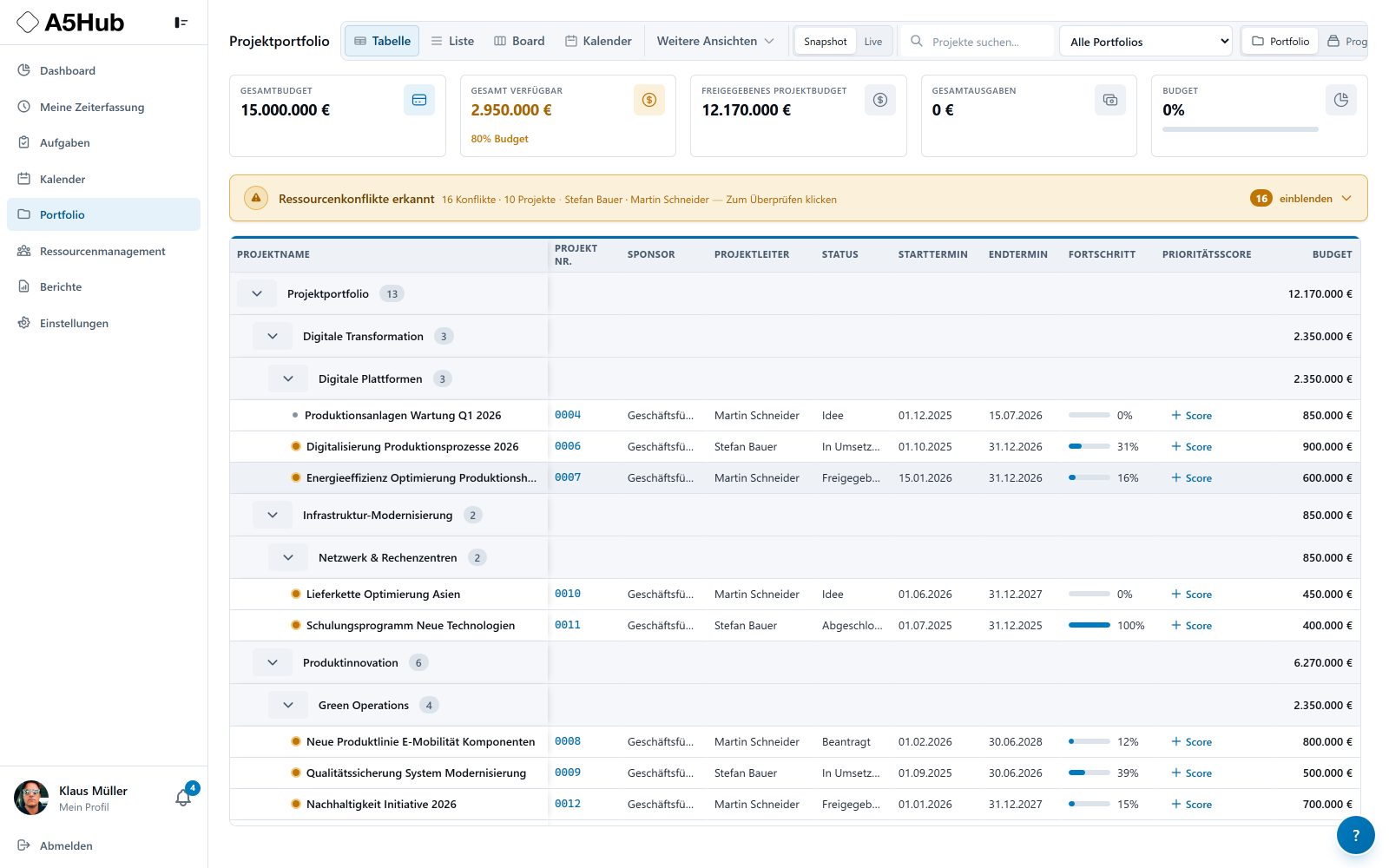
PPM for financial institutions: connect projects, line capacity, resource approvals and baselines, with traceable changes and AI proposals for work breakdown structures.
Learn more
This overview connects T-NEX products with their functional manuals and documented versions. It helps your business and IT teams assess functions and extension options. The specific installation and operating scope is agreed for your project.
The 286-page Controlling manual dated 25 August 2026 describes an installation at a German institution. It documents IT cost planning, data imports, allocation and administration. Edition 3 identifies the revision of the manual itself.
The installation includes controlling and reporting as well as Import Manager, App Studio and Notification. The selection for another institution is defined separately.
Chapter 29.4 of the Controlling manual describes App Studio as a toolkit for additional applications with their own interface, data and permissions. The associated management functions activate, import and export app modules. Extending the platform to support additional business tasks is therefore a documented capability.
For a specific extension, the required data models, interfaces and permissions are defined and tested. The documented App Studio scope provides the starting point for that assessment. Its description makes no universal commitment that every custom workflow can be implemented.
The Compliance manual dated 30 August 2026 has 58 pages and specifies application version 15.23.0. It describes the workflow from regulations and internal control documents through requirements and assessments to remediation, tasks and audit. The steps are linked to roles and approvals.
The documented examples show how work is handled in the module and which permissions apply. They establish that functional scope. The Controlling installation in the same documentation collection lists Compliance as disabled, so it does not serve as a deployment reference for Compliance.
The 107-page PPM functional documentation dated 30 August 2026 describes frontend 0.8.5 and server 15.23.0. It covers portfolio and programme views, work breakdown structures and Gantt planning, baselines, resource requests and status reports. Permissions distinguish project managers, the PMO and line management, among other roles.
A useful assessment case connects a project need to its resource request, the line manager’s decision and the resulting plan. This tests whether responsibility, available capacity and the commitment fit together. PPM is offered to regulated markets and companies; the role structure and technical connections are defined for the engagement.
The 23-page Fraud Detection manual dated 30 August 2026 specifies application version 15.23.0. It describes nine rule types, grouping matches into cases, supporting transactions, AI-assisted triage, analyst decisions and retrospective rule testing. Data integration and AI configuration are covered as separate administration tasks.
A demonstration can use an unusual and a routine sample case with a defined data source, rule trigger and handling sequence. Assessment should also cover a failed AI call and continued manual handling. Case management, payment blocking and submission to an external reporting authority are evaluated as separate capabilities.
The 77-page user documentation for MONTEE Industrie 5.0 dated 29 August 2026 describes an embedded T-NEX platform client. User accounts and roles are managed in that embedded backend. Its illustrated interface displays version 15.23.0.
MONTEE is a customer-owned business application developed by T-NEX. Its documentation serves here as evidence of embedded platform administration. It does not describe an installation at a financial institution or the operating scope of every T-NEX module.
The editable procurement overview summarises the documented products, their inputs, results, assessment tasks and evidence types. It includes fields for your requirements, interfaces and intended operating scope.
For a technical discussion, identify the functions, roles and interfaces you need. Together, we map them to relevant modules and define the workflows and results to be assessed. The intended version and configuration form part of that discussion.
Procurement also considers the operating environment, data access, responsibilities and agreed services. Technical module descriptions address functional scope. Contracts, operational commitments and project-specific data protection documentation are handled for the individual engagement.
Version 15.23.0 is assigned here to the documented compliance application and the platform interface embedded in MONTEE. It does not identify a single version of every application.
A functional manual describes capabilities and the state it records. The Controlling manual also documents a specific institutional installation and its module selection. Ongoing operation with agreed services is considered separately for each engagement.
The scope is defined for each installation. For example, the documented controlling installation does not have the compliance module enabled.
Identify the workflow, participating roles, data sources and expected result. These can be used to define an appropriate module combination and testable cases. The operating model and other procurement requirements are specified within the same project.
PPM for financial institutions: connect projects, line capacity, resource approvals and baselines, with traceable changes and AI proposals for work breakdown structures.
Learn more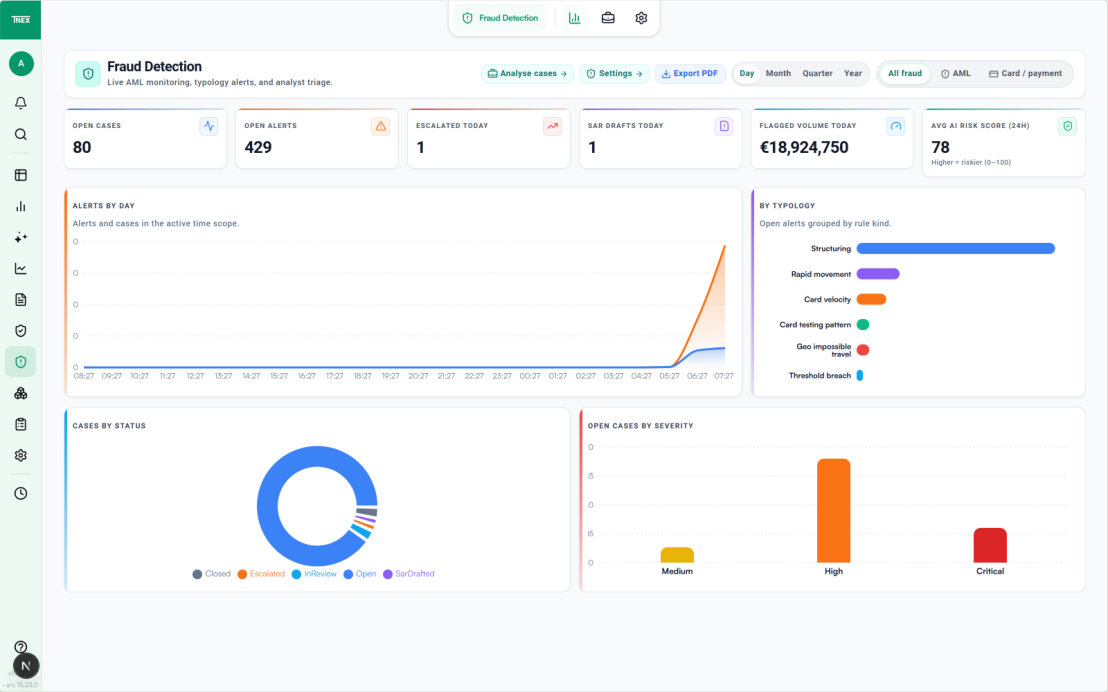
Review transactions, group alerts and investigate cases. T-NEX Fraud Detection connects rules, AI triage, supporting transactions and a traceable audit trail.
Learn moreDevelop applications on the T-NEX platform with defined data access, testable acceptance criteria and agreed rights, handover and operational responsibilities.
Explore serviceBring a concrete task. Together, we will define what the application needs to do.
Discuss a technical assessment