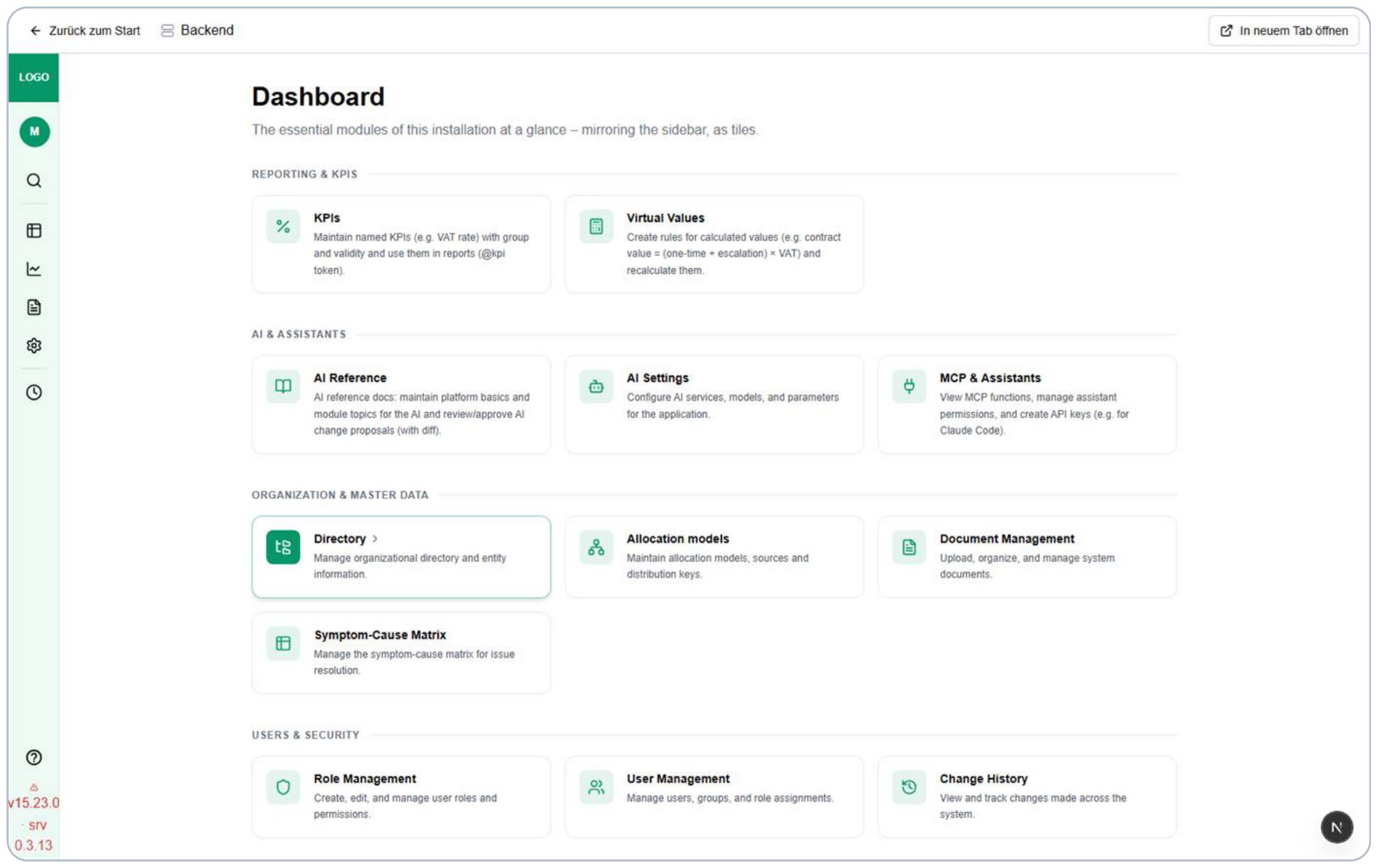
T-NEX Banking Platform
One banking platform for controlling, reporting, compliance, risk, PPM and fraud detection. Shared data model, AI at the core, configurable for your institution.
Learn more
T-NEX Controlling brings together supplier invoices, contracts, budgets and planning data. Your team can identify variances and trace them to their source. Cost reviews and planning discussions then use the same data foundation.
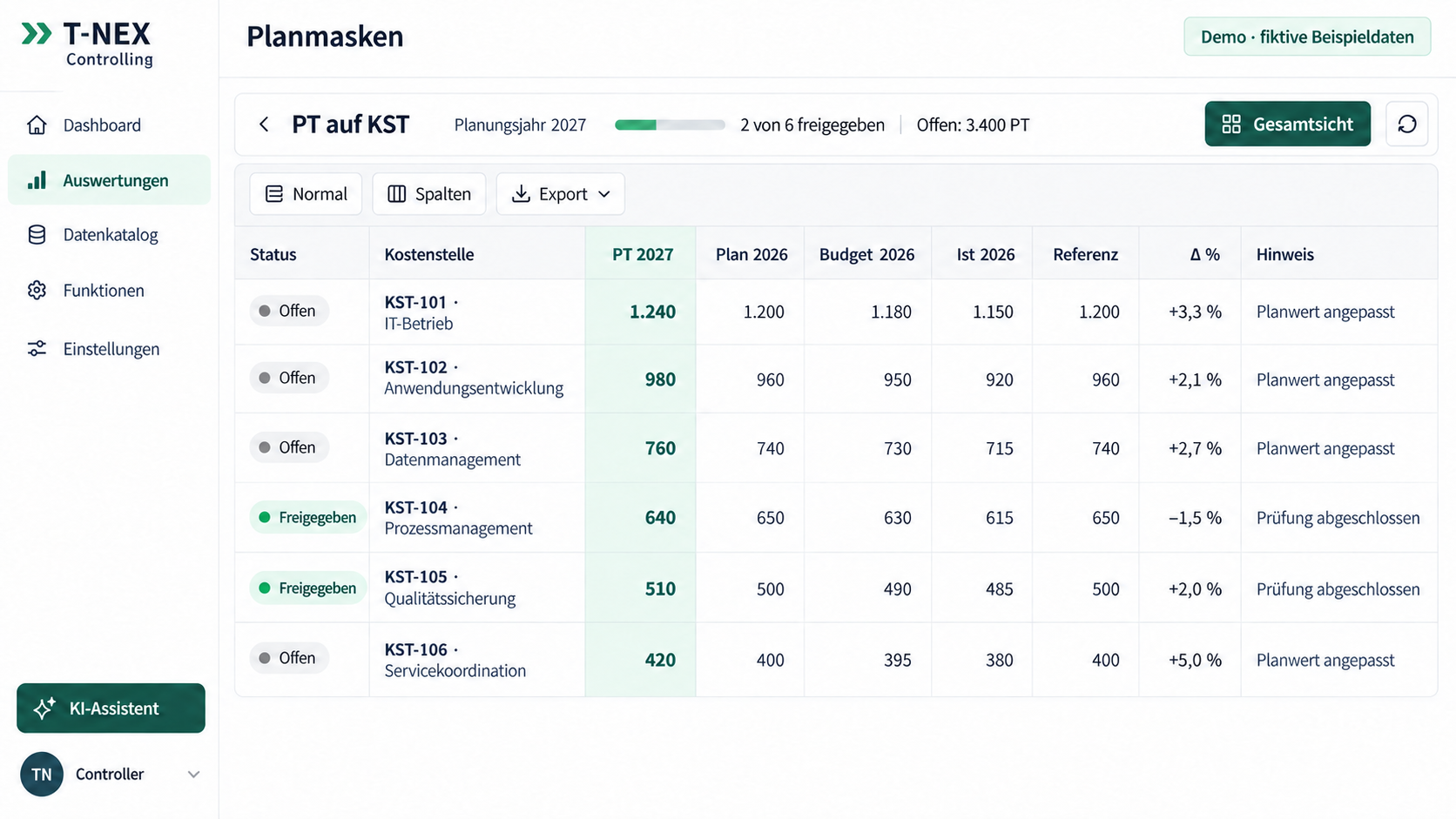
Plan cost centres, assign contracts and analyse variances: the key steps in context.
Plan effort for each cost centre in person-days. Reference values, variances and review status appear next to the planned figures.
Compare the next planning cycle with its reference values.
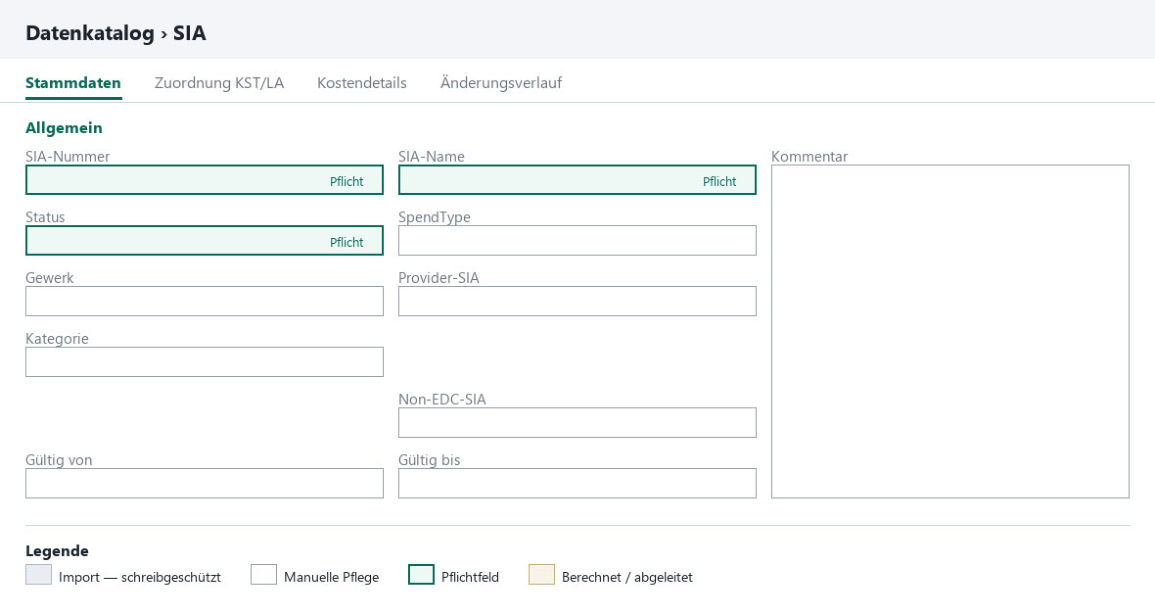
Enlarge viewRequired fields, status and validity give the internal order a business context. The schematic shows the input structure without populated customer data.
Classified master-data record with validity
 Enlarge view
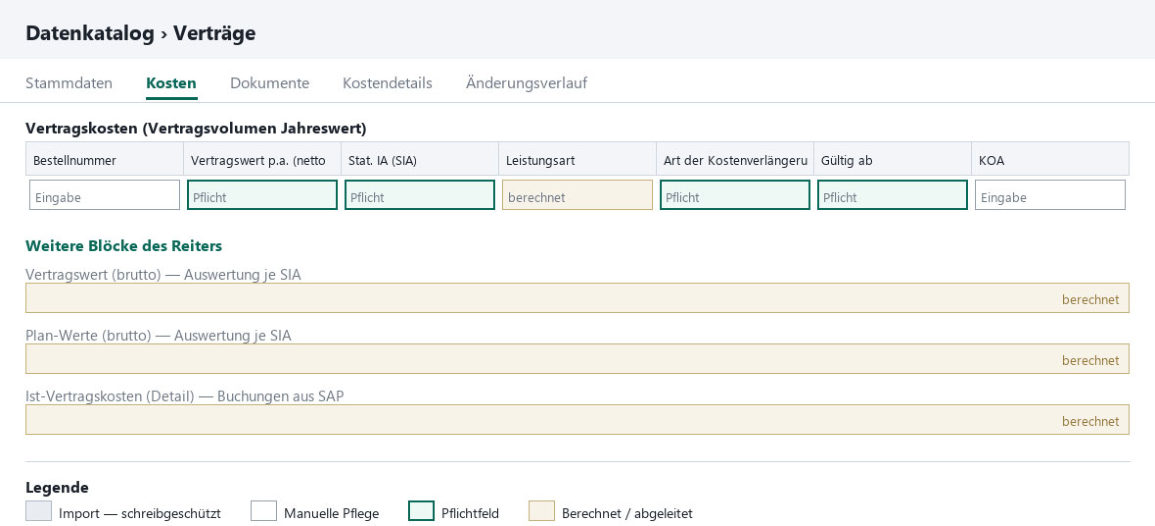
Contract values are connected to the purchase order, internal order and validity. The form distinguishes input fields from derived information.
Contract costs linked to an internal order; plan/actual comparisons remain distinct
 Enlarge view
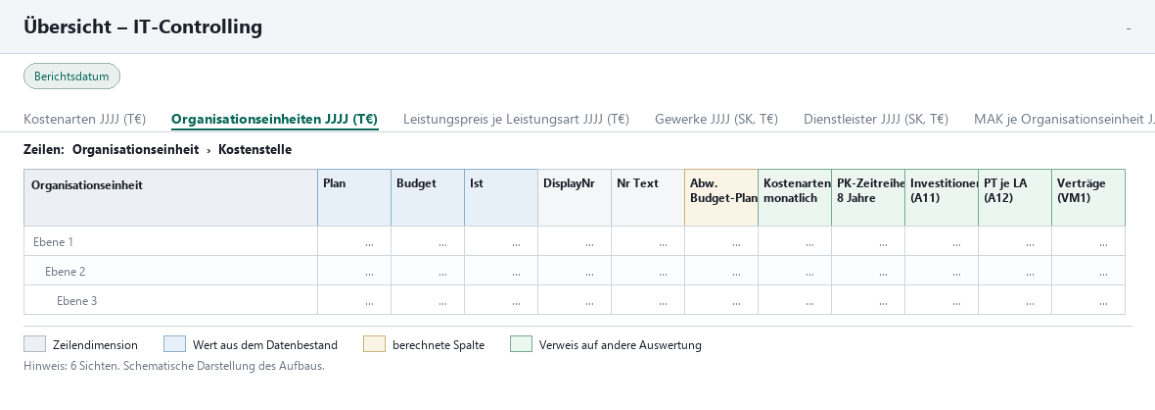
The overview compares plan, budget and actuals across the organisation. Links lead from the summary to the relevant detailed report.
Hierarchical comparison with links to detailed reports
 Enlarge view
For institutional IT cost management teams that need to analyse provider invoices alongside internal cost data.
T-NEX Controlling connects IT cost planning, data imports, allocation and reporting. Import Manager, App Studio and notifications support the workflow. Your team works in one system from imported actuals to an agreed planning baseline.
Import tiles show the data area, latest run and months with data. Logs record processing and mapping.
Planning figures are compared against the reference defined for each planning view.
New and replacement records and their totals are shown before the run is executed.
Allocation views show sources and destinations with their shares and validity periods.
Data catalogues distinguish imported, manually maintained and calculated fields. Changes remain traceable.
Configuration determines which reports and system functions an assistant may use.
T-NEX Controlling holds cost centres, internal orders, activity types and cost categories together with their values. Contracts connect agreed annual amounts with purchase-order numbers and imported actual costs. Material and server records add quantities and prices for IT cost planning.
Each amount retains its business meaning: what is measured, which planning state it belongs to and which period it covers. Operating expenditure, personnel costs, investment and depreciation are therefore distinguished, as are actuals, budgets and different plan values.
The budget represents the approved financial envelope. Plan-IT records operational IT planning, entered in planning forms or generated by planning runs. The multi-year financial plan is produced through a separate transfer of a defined budget position.
This distinction prevents misleading comparisons. A variance between operational demand and budget answers a different question from a change in the multi-year financial plan. Open purchase commitments are recorded separately from costs already posted.
| Value category | Meaning | Origin |
|---|---|---|
| Actuals | Costs already posted | Imported from authoritative sources |
| Commitments | Open obligations, not yet actual costs | Imported open purchase orders |
| Budget | Approved financial envelope | Budget values and budget changes |
| Plan-IT | Operational IT planning | Planning forms and planning runs |
| Financial plan | Multi-year financial view | Separate run from a defined budget position |
Planning owners use dedicated forms for operating expenditure and investment, person-days, and material and server quantities. Reference values and variances indicate which positions need attention first. Plan values are entered with the required assignments and comments.
The planning assistant supports recurring runs, such as deriving plan values from contracts or carrying forward multi-year budgets. A preview shows affected records and totals before execution. Planning year and release status control when input is allowed and when the planning position is locked.
Provider data is combined with price lists, quantities and allocation information. Server-cost analysis can trace where an amount originated and which cost objects received it. Reports support both directions: costs distributed and costs received.
A service price catalogue compares a service rate with its components, such as personnel, operating costs, depreciation and services obtained from other units. Differences between price calculation and allocation can therefore be investigated. Accounting entries remain the responsibility of the finance system.
Import history and logs show whether the expected deliveries are available. Data-quality checks address missing assignments, incomplete master data and implausible distributions. Cost-allocation checks can, for example, verify that a source’s outgoing shares are complete.
Reports provide filters and paths from totals to the underlying positions. Data catalogues distinguish imported, manually maintained and calculated fields. Corrections can therefore be made at the appropriate source rather than only against a visible total.
The controlling assistant can use the maintained business documentation and system functions permitted for that assistant. AI Reporting adds natural-language questions and editable dashboards. Providers, models and allowed functions are configured for the environment.
The monthly cycle remains structured: receive data, check completeness and assignments, investigate variances and document decisions. AI supports analysis; responsibility for metric definitions, planning logic and approvals remains with the institution.
Define authoritative sources, cost objects and planning terminology.
Configure imports, master data and business assignments.
Reconcile a monthly report with known source figures.
Test planning forms and planning runs with the relevant roles.
Establish releases, locks and recurring checks for operation.
T-NEX Controlling supports planning and analysis. Institution-specific allocations, metrics and approval rules are defined during implementation; accounting entries remain in the authoritative financial systems.
The application supports IT cost planning, analysis and traceability. It describes cost allocations but does not generate accounting entries from them.
Plan-IT is operational IT planning. The financial plan supports the multi-year view and is generated through a separate run from a defined budget position. Both are maintained separately.
Yes. The procedures connect provider charges with price lists, quantities and business assignments. File formats, identifiers and account assignments are configured for the provider concerned.
Import logs and history help identify the cause. The authoritative source, affected period and corrected delivery are checked before records are replaced or processed again.
Project references can support cost assignment. Detailed management of projects, resource requests, baselines and status reports is the focus of the separate PPM product.
Implementation follows your data sources and planning rules. Together we define the cost objects, value types, reports, approvals and interfaces to configure.
One banking platform for controlling, reporting, compliance, risk, PPM and fraud detection. Shared data model, AI at the core, configurable for your institution.
Learn more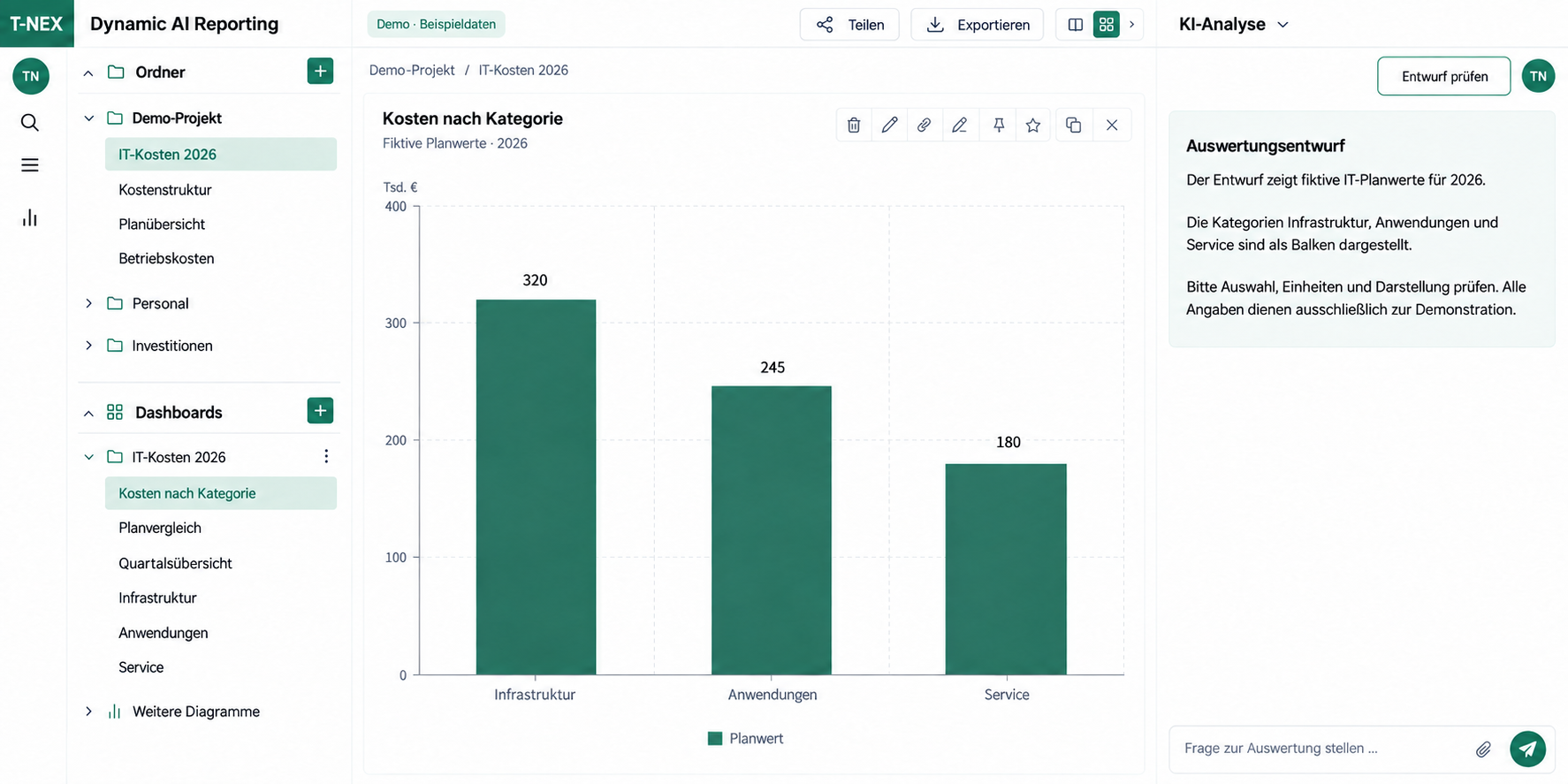
Dashboards from natural-language questions. T-NEX Dynamic AI Reporting combines data queries with editable charts and role-based permissions.
Learn more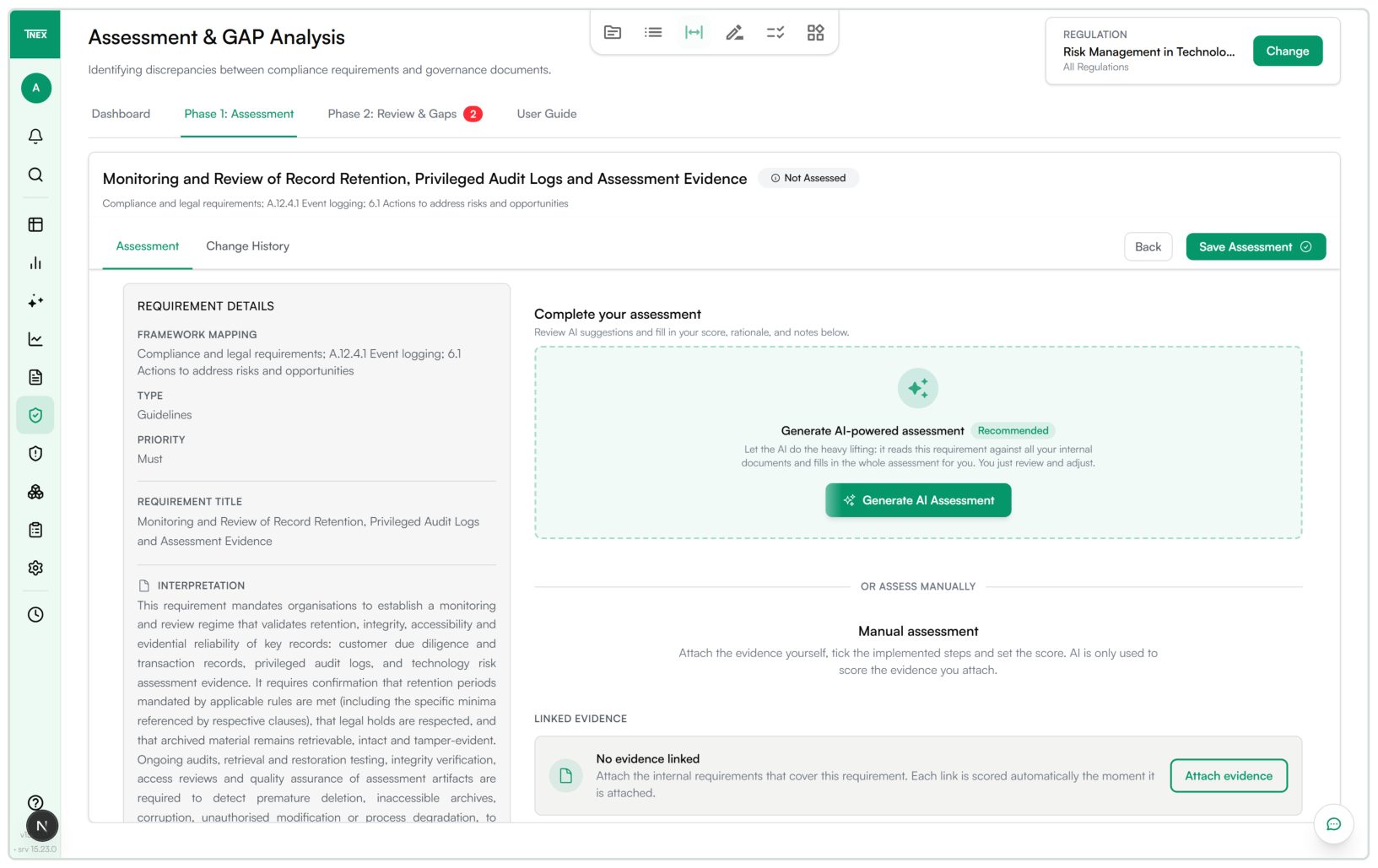
From uploading a regulation to issuing an audit report: T-NEX Compliance connects requirements, assessment, remediation and progress monitoring.
Learn moreBring a concrete task. Together, we will define what the application needs to do.
Walk through your IT cost process