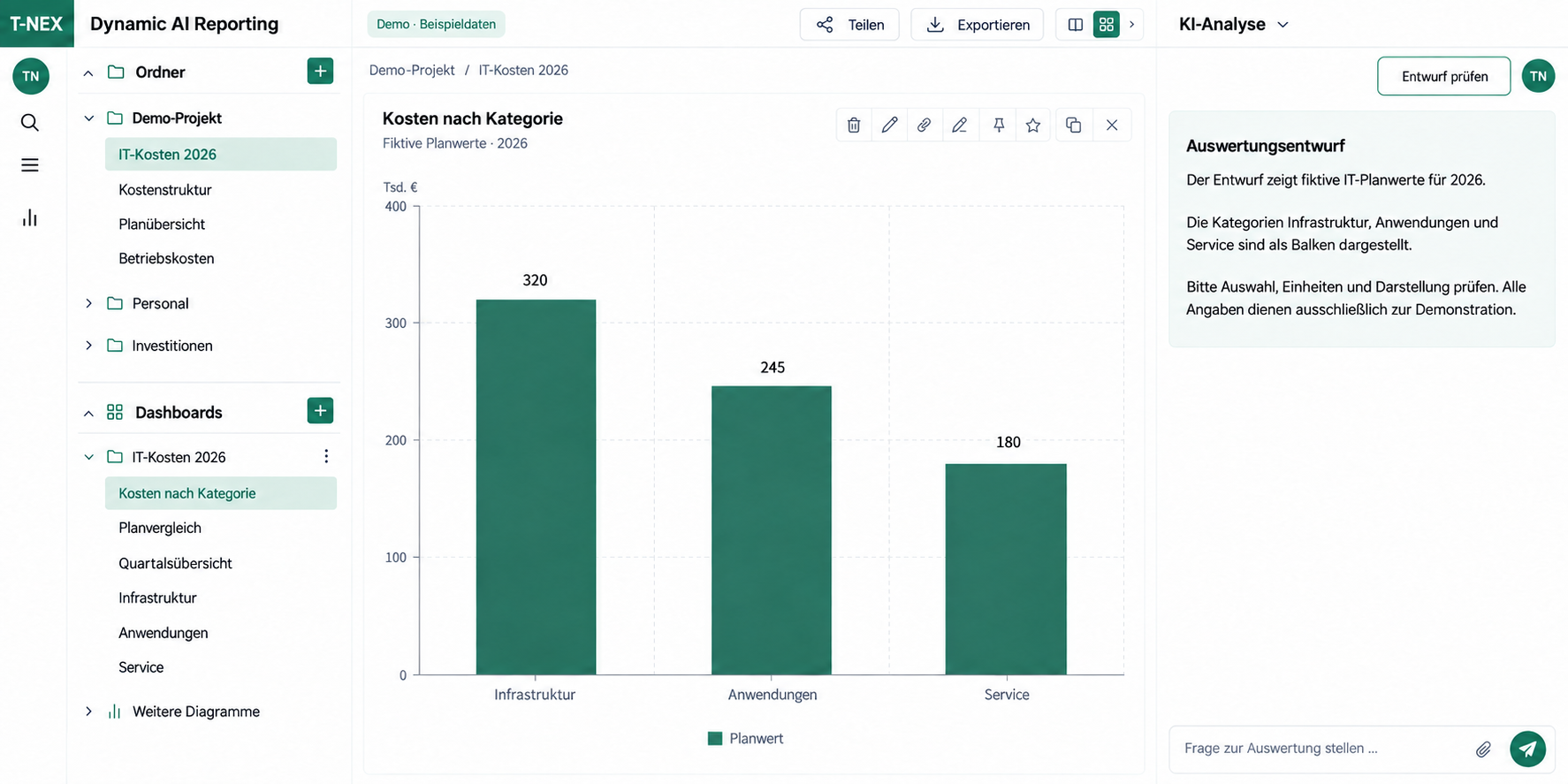
T-NEX Dynamic AI Reporting
Dashboards from natural-language questions. T-NEX Dynamic AI Reporting combines data queries with editable charts and role-based permissions.
Learn more
Controlling, reporting, compliance, risk, PPM and fraud detection work on a shared data model. Chatbots, document AI and workflows connect the business functions. Start with the modules you need and extend the Banking Platform as your requirements grow.
One integrated product
Combine the modules your institution needs. They share data, business context and workflows, supported by one AI foundation.
Select a module to explore how it works with the others.
Shared AI foundation
Understand, analyse and assist across business functions.
Ask questions in business context
Extract and use document content
Connect tasks, roles and approvals
One data model for every module. Information stays connected to its business context.
Shared roles and permissions · Connected data sources · Traceable processing
Working together · Controlling
Controlling identifies a budget variance. If it represents a risk, risk management takes over the issue with its business context. Reporting brings the figures, assessment and actions together to support the decision.
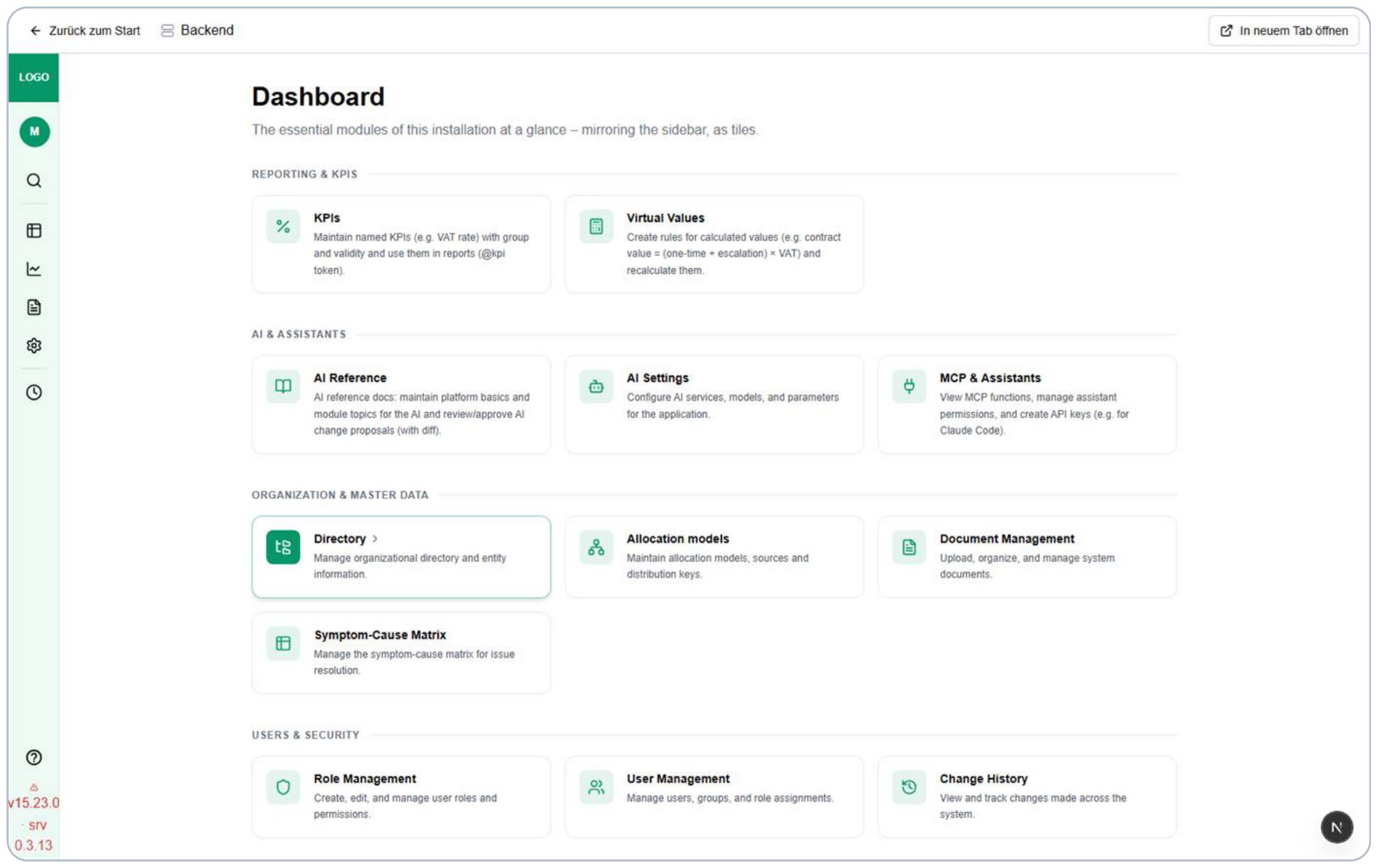
Explore the moduleBring modules, data and access together in shared administration.
The administration overview groups shared platform functions. It leads to master data, roles and other configured modules.
A shared entry point to administration.
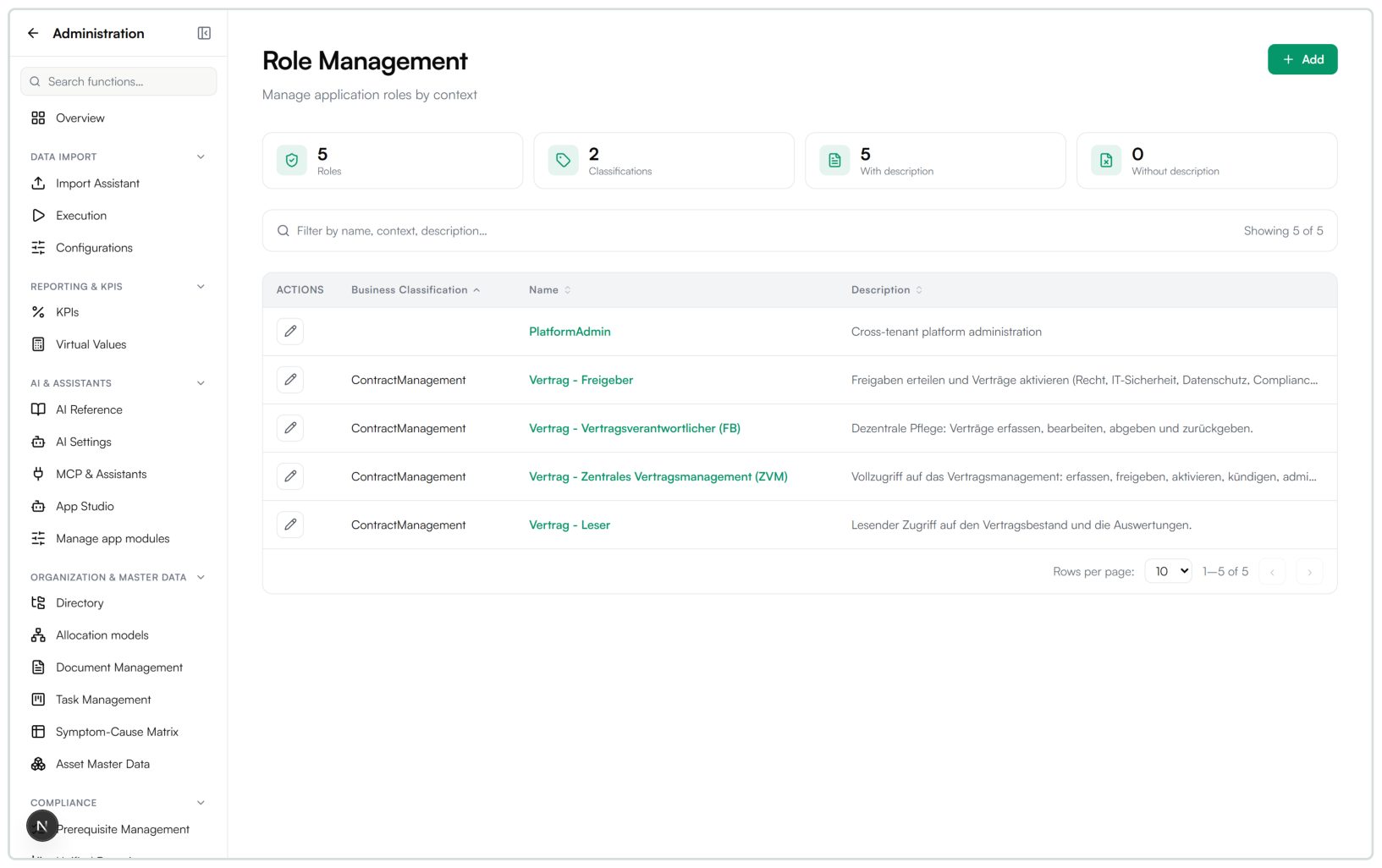
Enlarge viewRoles can be found and edited by business context. The visible list provides orientation; actual object permissions are configured separately.
Business roles become findable and assignable.
 Enlarge view
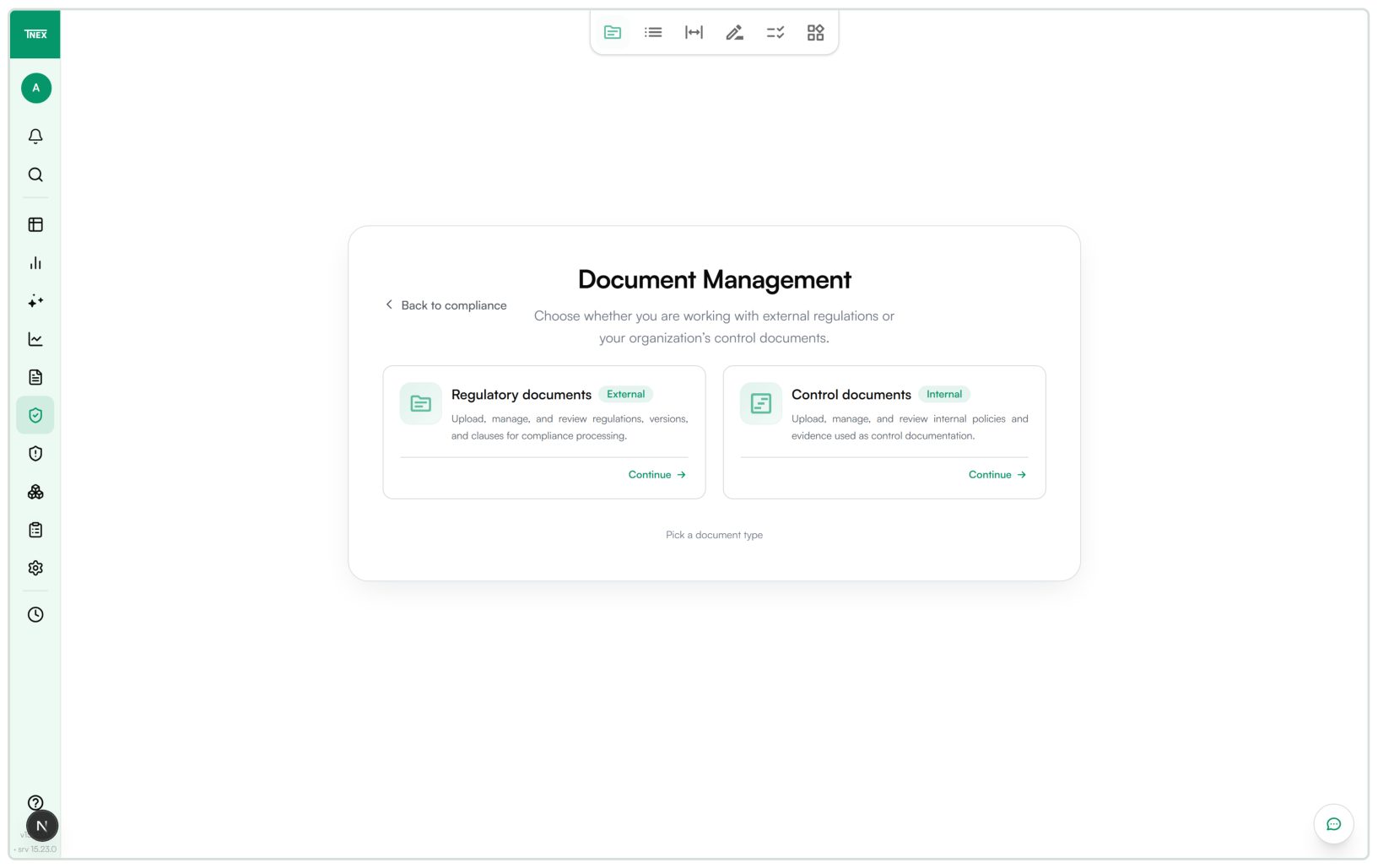
The Compliance module distinguishes external regulations from internal control documents. Document type determines the next working context.
Documents start in the appropriate business context.
 Enlarge view
For organisations in regulated markets that want to connect teams, information and decisions on one platform.
A project, cost item or risk remains the same business record when several teams work with it. The modules use shared data objects and link metrics, documents, controls, actions and owners. Together, they build a connected view of your institution.
A risk identified in controlling or compliance can be assessed and assigned actions in risk management. Project portfolio management coordinates related initiatives; reporting brings progress, costs and risks together. The information exchanged between modules and the actions triggered are configured around your processes.
Shared data objects reduce repeated recording and reconciliation of the same information across business teams.
Costs, project progress, requirements and risks can be considered together, bringing their relationships into management decisions.
An issue stays linked to its source from the first signal through assessment to action.
The chatbot, document AI and analysis capabilities provide support in the business context of connected modules.
Shared roles and workflows connect tasks, processing status and approvals across teams.
Choose your starting point and add modules on the same platform as new needs emerge.
The shared AI foundation supports business modules in retrieving information, analysing data and handling tasks. A connected chatbot makes approved knowledge and analysis accessible in context. Document AI turns content from rulebooks, reports and supporting documents into information for further processing.
Workflow automation connects this support to practical steps: assigning information, creating tasks, involving owners and requesting approvals. Model access, permitted data and assistant capabilities are configured centrally. Business decisions and approvals remain with the designated roles.
Shared data connects the perspectives of management, business teams and IT. Budget decisions can take projects and risks into account. Compliance actions remain linked to requirements and controls. Confirmed findings from fraud analysis inform risk assessment and reporting across the platform.
This reduces repeated maintenance of the same information and makes handovers easier. The origin of an issue, its assessment and its processing status remain traceable. Reports draw on the connected workflows.
Start with the modules that offer the most value for your institution, such as controlling and reporting, or compliance and risk management. Further business modules extend the existing platform and use its shared data and AI foundation.
Data sources, roles, forms, analysis and workflows are configured for your organisation. Existing systems connect through agreed data paths. Additional applications and specialised workflows can be built on the same foundation. The platform’s scope grows with your needs.
Select modules around your most important business tasks.
Agree on the shared data model, data sources and ownership.
Configure module handovers, AI support and approvals within your workflows.
Launch with the teams involved and expand the platform step by step.
Banking Platform is an integrated, modular product. The selected business modules use a shared data model and central AI, document and workflow capabilities. They are combined into a connected working environment for your institution.
No. You can start with the modules you need and add more later. Data flows, roles and workflows are configured for your initial scope and extended as the platform grows.
A risk is linked to its business origin, such as a budget variance, compliance requirement, project or confirmed fraud case. Risk management handles assessment and action tracking. Handovers, triggers and approvals are configured around your processes.
The chatbot uses the platform information and functions approved for its task. It supports questions about data, documents and analysis in context. Access, model connections and permitted actions are configured centrally.
Yes. Data from existing systems connects through agreed interfaces or import paths. Additional applications can use shared platform services. We agree on data flows and any specialised extensions with your institution.
Dashboards from natural-language questions. T-NEX Dynamic AI Reporting combines data queries with editable charts and role-based permissions.
Learn more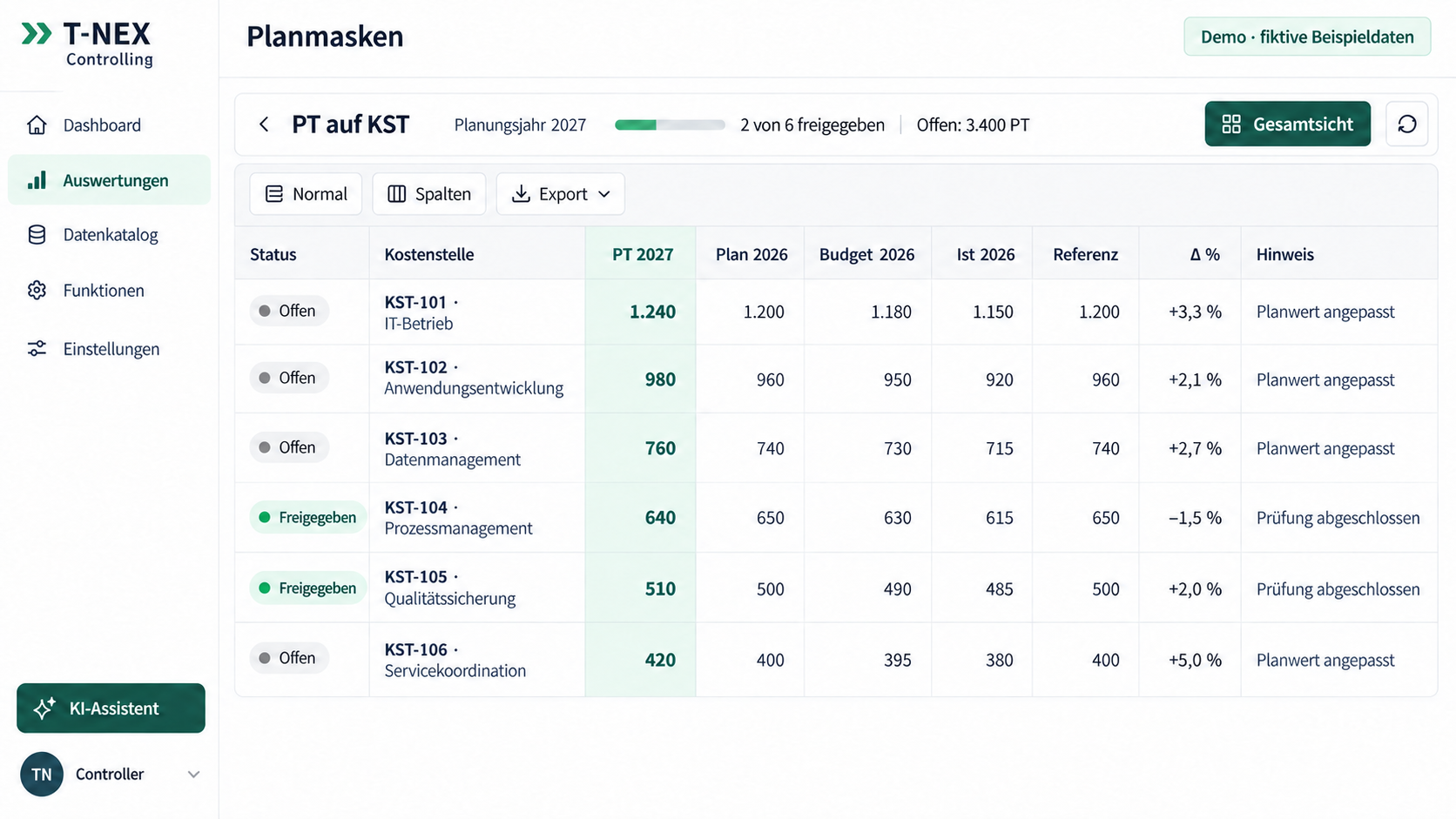
Plan and allocate IT costs. T-NEX Controlling combines imports, planning views and reports with traceable allocation rules.
Learn more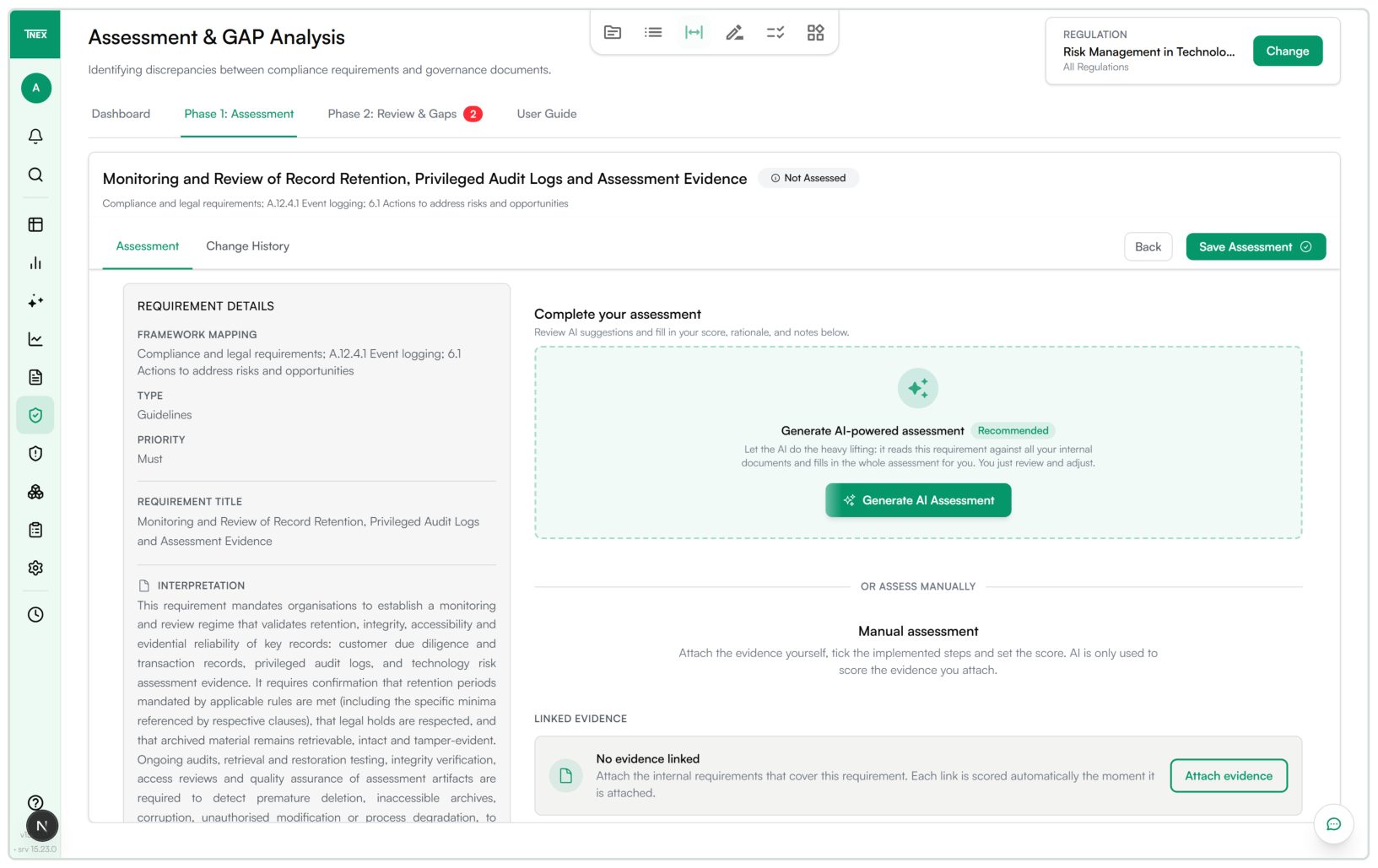
From uploading a regulation to issuing an audit report: T-NEX Compliance connects requirements, assessment, remediation and progress monitoring.
Learn moreBring a concrete task. Together, we will define what the application needs to do.
Discuss your banking platform