T-NEX Banking Platform
One banking platform for controlling, reporting, compliance, risk, PPM and fraud detection. Shared data model, AI at the core, configurable for your institution.
Learn more
T-NEX develops custom applications and extends the shared platform with your data models, interfaces and workflows. Business and IT teams shape the scope from the outset. The software translates your requirements into everyday work.
Platform principle; the specific scope is agreed for each project.
We begin with a specific process: what information arrives, who handles it and what result is required? We record the participants, data sources, decisions and exceptions. This becomes a defined functional scope and an interface design that your business team can review early.
| Item | Scope |
|---|---|
| Result | An interface design and defined functions for one complete working case. |
| Your contribution | Workflow, roles, sample data, existing systems and one difficult exception. |
| Joint review | Create, process and approve a record; walk through missing information and role permissions. |
| Pricing approach | Separate configuration, new development, migration and integrations. Identify external services and support separately. |
| Decision | Agree the assessed scope, acceptance and handover for implementation. |
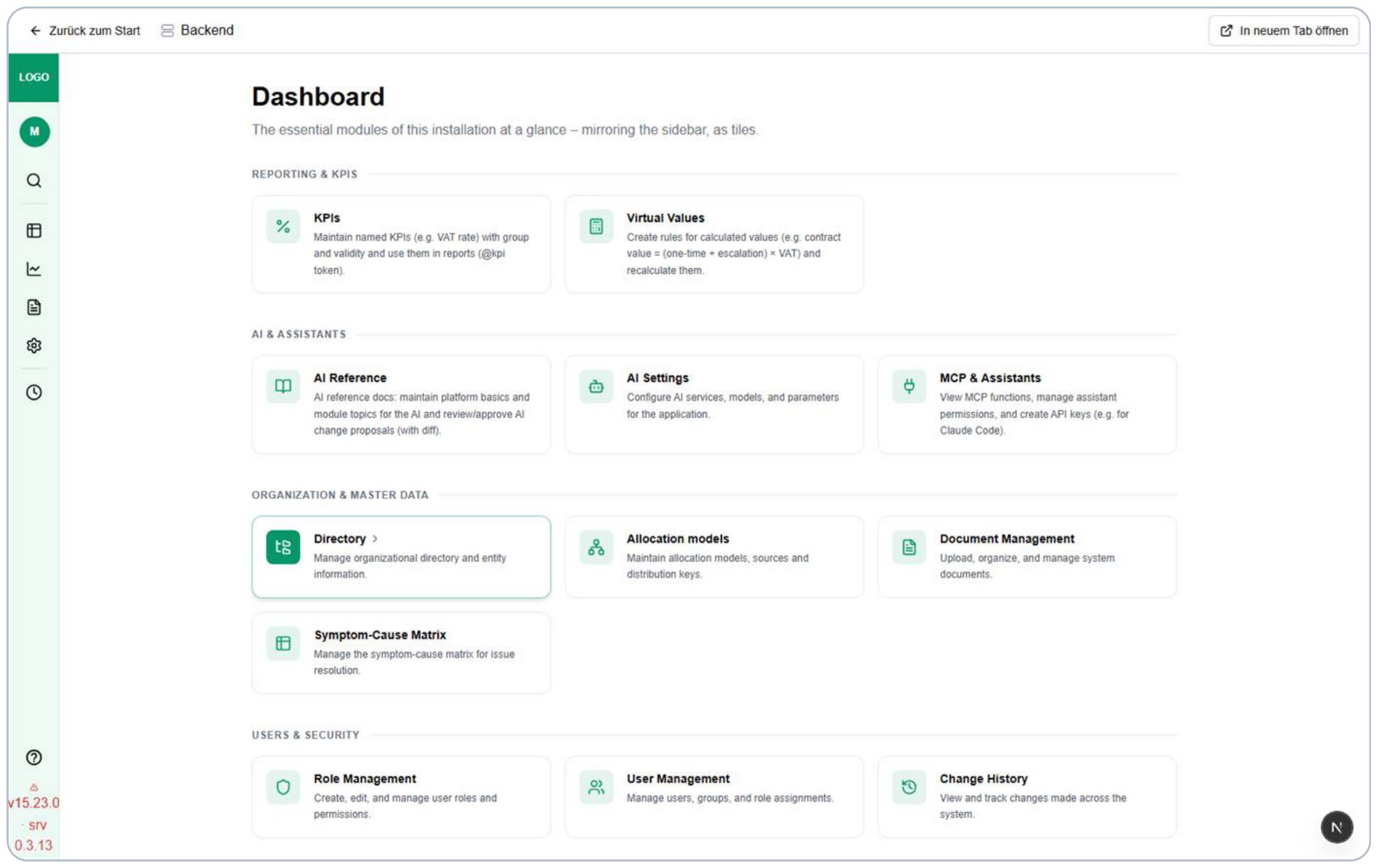
The T-NEX platform provides configurable roles and permissions alongside components for forms, data views and reports. App Studio adds declaratively defined applications with their own interface, data and permissions. Its module management supports activation, import and export of these app modules.
For your project, we assess which requirements can be met through configuration and which need additional development. The agreed scope names the required modules and changes. Interfaces and dependencies involving existing applications are assessed for that specific combination.
A business application needs a reliable mapping of its data. We describe the source of each field, how it is transferred and which checks apply before further processing. For configurable file imports, Import Manager provides file mappings, field mappings and execution logs.
For additional interfaces, we agree authentication, transfer direction, error handling and reconciliation of the results. Test cases also cover incomplete data, duplicate transfers and interrupted connections. The responsible teams can then evaluate how the agreed process behaves in those conditions.
Requirements become acceptance cases with input data, participating roles and expected results. We test the complete workflow, including approvals and agreed outputs. Permission checks also show how the application handles access by a user without the required rights.
Deviations, decisions and the accepted functional scope are recorded during project acceptance. Later change requests are reviewed for scope, impact and effort. This keeps the original commitment and each commissioned extension clearly defined.
The proposal distinguishes existing platform components, newly developed components and third-party software. It defines the agreed use, modification and onward transfer of each. The treatment of reusable development components is also described explicitly.
The agreed handover may include source code, configurations, setup and user documentation, and data exports. We define what your team or a successor provider will need and how the handover will be checked. Rights to existing platform components are agreed separately.
Before introduction, we establish who will operate the application, who owns the required accounts and who handles updates, backups and incidents. The operating environment, access, contacts and agreed response times are defined for the project. This also covers the responsibilities of your own IT operations team.
Maintenance, defect correction and functional extensions each receive a defined service scope. The data, documentation and handover steps needed for a later change of operator are considered as well. This supports operation and development beyond the initial introduction.
The T-NEX platform provides reusable components. We first assess which requirements can be covered by existing modules and configuration. Additional screens, data models or integrations are then defined as a separate development scope.
App Studio supports additional declaratively defined applications with their own interface, data and permissions. Module management activates, imports and exports these app modules. Their suitability for your workflow is assessed within the specific project.
The handover scope is agreed in the proposal. We distinguish custom development, existing platform components and third-party software. Source code delivery and the associated rights to use and modify it are described explicitly.
We record the change and agree its impact on functionality, acceptance, effort and timing. The extension receives its own approved scope before the additional work begins.
One banking platform for controlling, reporting, compliance, risk, PPM and fraud detection. Shared data model, AI at the core, configurable for your institution.
Learn moreFunctions, manual versions and assessment cases for T-NEX Controlling, Compliance, PPM and Fraud Detection, with an editable procurement overview.
Learn moreEntities, international team locations, data access and operational responsibilities: concrete topics for assessing a proposed engagement with T-NEX.
Learn moreBring a concrete task. Together, we will define what the application needs to do.
Discuss your task and development scope