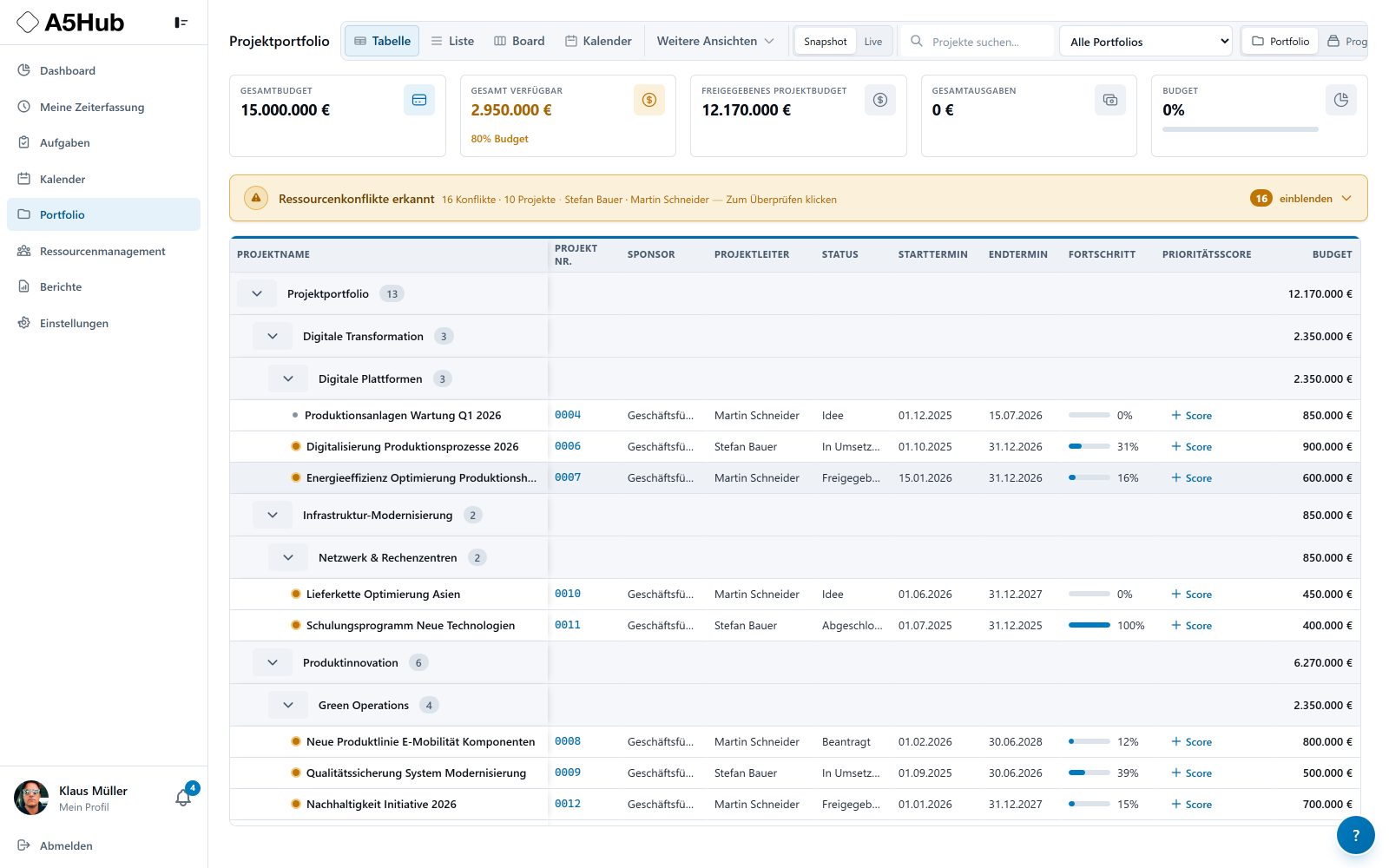
Project portfolio management
T-NEX PPM connects portfolios, projects, resources and costs. Plan work packages, agree capacity and compare changes against an established baseline.
Learn more
For workplace AI, the actual functions and data flows matter. Information about planned working methods, co-determination concerning technical monitoring and data protection assessment are distinct tasks. A traceable system description gives the parties a shared basis. This guide concerns establishments in Germany under the Works Constitution Act (BetrVG). Updated 11 September 2026.
For management, IT, HR and works councils introducing AI or data-based work systems in Germany.
Section 90 BetrVG requires timely information and consultation on planned working methods and processes, including AI use. Consultation should happen early enough for suggestions and concerns to influence the plans. Do not wait for a finished configuration before describing the system.
Section 87(1), no. 6 addresses introduction and use of technical devices for monitoring behaviour or performance. The right is subject to the statutory and collective-agreement proviso at the start of section 87(1). A general product presentation or project update does not replace clarification of an applicable co-determination requirement.
| Question | What to clarify |
|---|---|
| Which work changes? | Describe tasks, workflows and planned AI functions early |
| What monitoring becomes possible? | Assess personal attribution, capture, storage and analysis |
| Which processing is planned? | Assess purpose, legal basis, access and safeguards separately |
For section 87(1), no. 6, the Federal Labour Court considers objective suitability for monitoring behaviour or performance; an employer’s intention to monitor is not necessary. Its decision of 13 December 2016, 1 ABR 7/15, explains that principle. It is not a blanket classification of all AI applications.
Ask about logs and exports too: are tasks, timestamps, processing times, corrections or outcomes attributable to individual employees? Can managers create comparisons? Which data can be joined with other systems? Turning off one dashboard does not automatically rule out analysis through another route.
A production terminal, project portfolio system and internal knowledge assistant create different assessment profiles. Describe the deployment instead of making an unqualified promise of “no performance monitoring”. Whether a specific co-determination right applies depends on the actual system.
A useful document connects the proposed workflow with the resulting data. Include screenshots, a test case and a list of reports. Distinguish fixed behaviour, configurable options and limits the system cannot enforce. This allows open points to be addressed before piloting.
Demonstrate the assessment with representative test data. Explain explicitly where a personal link is needed to understand a function. Avoid prematurely claiming that aggregation always prevents identification or that administrator rights have no technical effect.
| Area | Specific information |
|---|---|
| Purpose and scope | Task, user groups, locations and excluded uses |
| Capture | Inputs, automatically created logs and personal attribution |
| Analysis | Metrics, comparisons, search and exports |
| Access | Roles, administrators, suppliers and actual access possibilities |
| Retention | Purpose-based periods, deletion and backups |
| Changes | New functions, models, integrations and approval process |
Calling a project a pilot does not create a general exception from participation or data protection requirements. What happens in the workplace, and with which data, remains decisive. Describe duration, participants, datasets, reports and the end procedure. Distinguish a technical demonstration using suitable test data from operational use.
Before starting, define how benefits and problems will be identified: domain quality, rework, unexpected data exposure or impermissible use. Assign an owner to each finding. At the end, record results and decide explicitly whether to continue, change or stop. A trial should not silently become permanent operation.
An existing IT framework agreement may already define procedures for new systems. Check its actual scope and required additions. Purpose, permitted analysis, access, retention, training and change procedures are useful headings for a new agreement. They form a working structure, not a universally suitable contract template.
Where the works council must assess the introduction or use of AI to perform its duties, section 80(3) deems expert assistance necessary. The requirement for a more detailed agreement with the employer still matters. Section 95 additionally addresses selection guidelines for specified personnel measures; subsection 2a confirms its application when AI is used to create those guidelines. This does not establish an identical consent procedure for every AI function.
For a co-determined matter under section 87, subsection 2 provides for the conciliation committee if agreement cannot be reached. Plan the resolution route before a disputed introduction instead of treating missing agreement as a technical remaining task.
New models, additional sources or more user groups can change the agreed use. Define which changes require another assessment and which evidence is needed. The parties should not discover expanded analysis options only after an export feature appears.
A workable operating process connects domain ownership, technical administration, data protection and workplace participation. Record the assessed version and configuration and the questions left open. A works agreement does not replace separate assessment under data protection law or the AI Act.
There is no single consent requirement triggered only by the label AI. Distinguish early information on planned work processes from specific co-determination rights. Functions, data and use determine the assessment.
No. Objective suitability matters for technical monitoring under section 87(1), no. 6. Describe logs, reports and exports as well as the intended main purpose.
The label pilot does not itself create an exemption. Assess the actual workplace deployment, personal data and applicable participation rights before starting. Document its boundaries and end.
There is then no works agreement to conclude with one. Other obligations, particularly for employee data and information to affected people, do not disappear.
A real workflow, system purpose, user groups, data and reporting inventory, roles and access, and the proposed pilot. Record unknowns as open questions instead of inventing functional limits.
T-NEX PPM connects portfolios, projects, resources and costs. Plan work packages, agree capacity and compare changes against an established baseline.
Learn more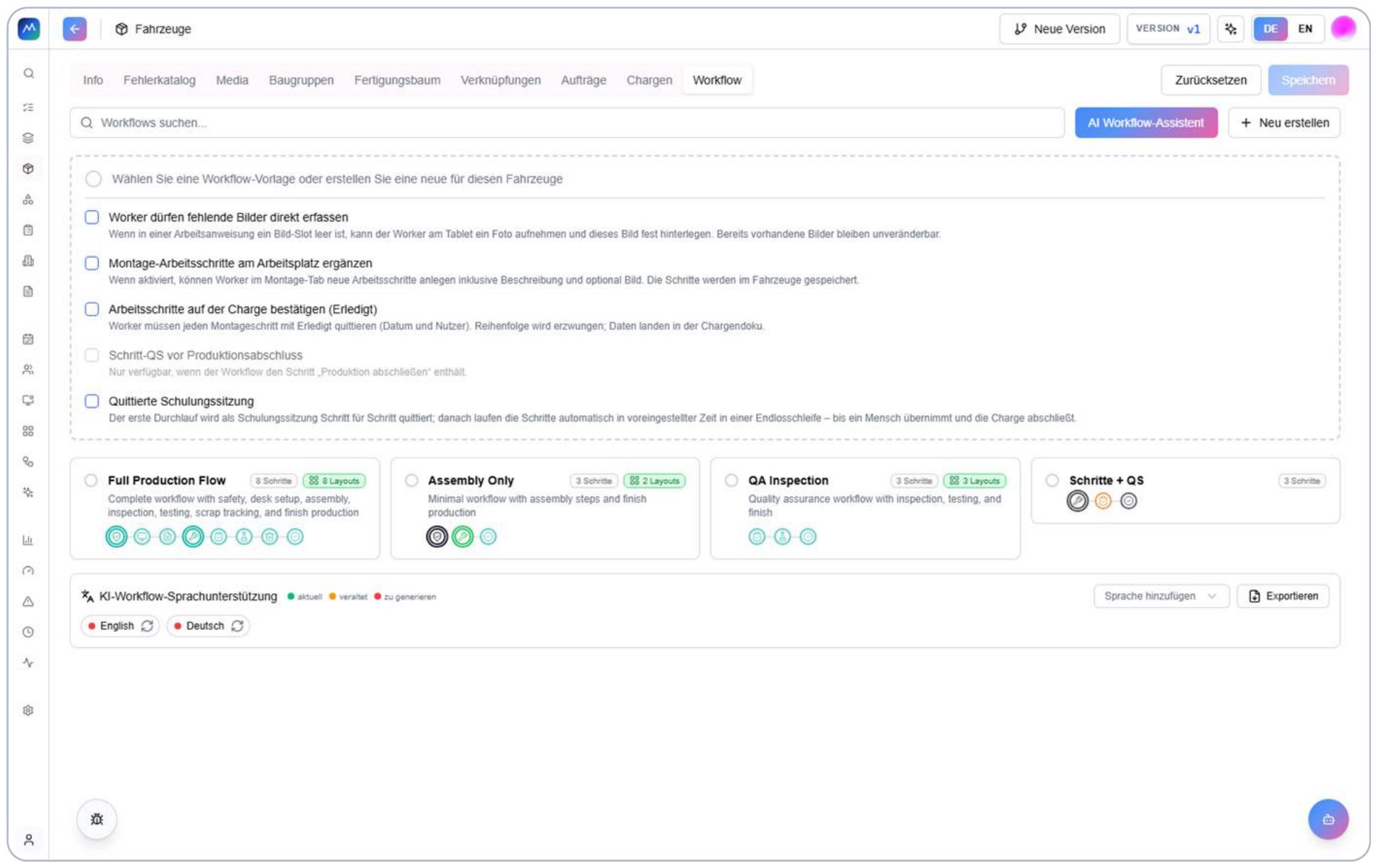
Manufacturing software for MONTEE, developed by T-NEX: work plans, operator guidance and capacity planning connect the office and production.
View referenceSelect manufacturing execution software using concrete tests for work plans, feedback, capacity, offline cases, employee data, integration and handover.
Understand Article 50 AI Act notices for chatbots, machine-readable marking, deepfake disclosure and editorially reviewed text in business workflows.
Bring a concrete task. Together, we will define what the application needs to do.
Discuss your AI project and system description