MONTEE · Manufacturing software
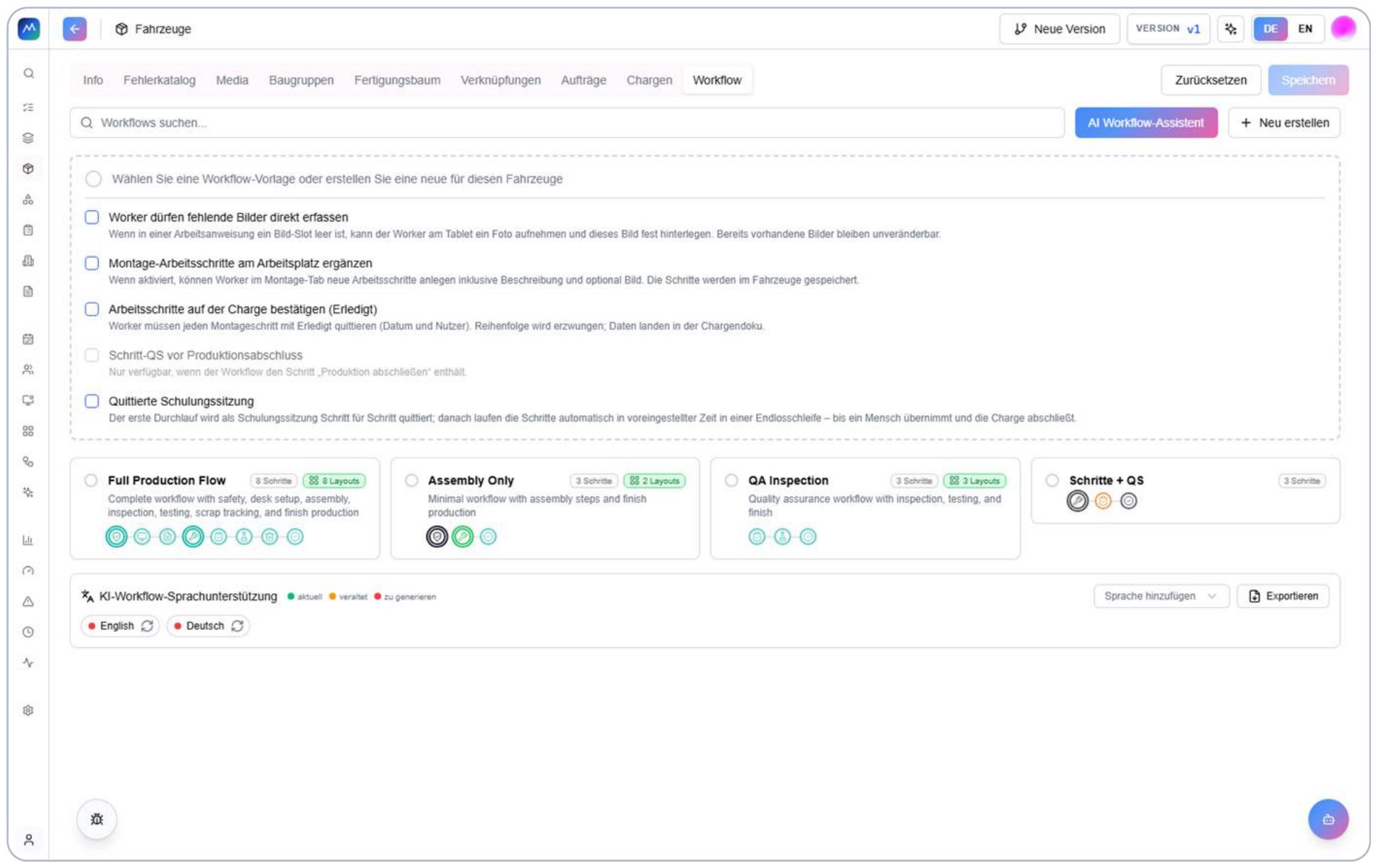
Manufacturing software for MONTEE, developed by T-NEX: work plans, operator guidance and capacity planning connect the office and production.
View reference
A manufacturing execution system (MES) is assessed through actual production: making orders available, guiding work, recording feedback and tracing exceptions. A long feature list does not establish a fit with your workplaces and data. This guide translates documented manufacturing workflows into practical selection and acceptance questions.
For production managers, work preparation teams and IT in industrial companies selecting manufacturing execution software or a focused shopfloor extension.
Start with the point where today’s process breaks down: are current instructions missing at workstations, is feedback entered later, or do exceptions remain in separate lists? Identify the authoritative systems for customer orders, items, stock and planning. Which system supplies each binding piece of information matters.
A comprehensive MES rollout and a limited application for work instructions or feedback can be different projects. Define the first required scope. Then assess whether an existing system covers it, an extension is sufficient or several processes need to change together. The acronym MES is not an acceptance specification.
Use representative orders and workstations from your own operation. A prepared product video provides orientation but does not test your exceptions. For each case, require traceable inputs, status changes and results. The following are selection examples, not promises about every supplier’s functions.
Add typical edge cases: starting a shift without an assigned order, handing over to another person or changing priority. An unsupported case is first a clear finding. It becomes an exclusion criterion when it is necessary for the agreed scope.
| Case | Demonstrated workflow | Result to check |
|---|---|---|
| Normal order | Provide order and work plan, perform a step, report quantity and completion | Order status, work plan version and feedback agree |
| Exception and rework | Record defect, identify affected quantity, document decision and rework | Ownership and the route to an approved result remain traceable |
| Connection failure | Disconnect and reconnect during the intended work process | Available functions, intermediate state, synchronisation and conflicts are understandable |
Distinguish the sequence of work steps from their presentation at the workstation. Do employees need text, images, video, checklists, bills of materials or measurement fields? Who creates and approves these materials? How does production learn about a change, and which version remains linked to an order already in progress?
Feedback needs an unambiguous quantity and reference. An order total provides different traceability from records per person, time period or operation. Choose granularity for a justified purpose. History captured only at a coarse level cannot later be refined arbitrarily through a new report.
Establish what is being planned: an order, fixed line, individual workstation or mobile team. Ask about shifts, availability, setup, parallel occupancy and qualifications. An arithmetically free hour is not automatically a usable production slot.
Ask how planned times are created and who may change them. Distinguish specified targets, historical values and optimiser suggestions. Also test missing qualifications: information, warnings and actual blocking have different consequences. Percentages used in a demonstration are not universal capacity reserves.
If automatic planning is proposed, require an understandable case with a bottleneck and a manual correction. For your agreed workflow, the system should explain what changed and which resulting conflicts remain unresolved. A visually full planning board alone does not establish an executable sequence.
Production data can identify people through logins, timestamps and work results. Explain openly which records are created and which analysis is possible. A blanket statement that there is no performance connection does not fit every manufacturing system.
Assess roles from the workstation to administration: who can view individual events, export data or combine it with other sources? What is aggregated, corrected or deleted? Involve data protection and, where applicable, the works council in that description. Legal assessment follows the intended use, not only the system’s name.
An available interface must fit the required business transaction. Record fields, transfer direction, frequency, failure handling and the authoritative data source. Test an interrupted import, duplicate feedback and a corrected item number. Establish who detects and resolves each failure.
Offline capability also needs a precise definition: which work plans and media remain local, which inputs are queued and how conflicts become visible after reconnection. A briefly accessible interface is not a complete offline workflow.
Handover should cover configuration, roles, operating documentation, data export and a reachable support channel. Include data preparation, work plan maintenance, devices, training and internal acceptance in the cost model. Compare the same operating period and responsibility scope; the licence price alone does not describe the project.
Give each requirement a status: demonstrated, committed with a defined scope, open or deliberately outside scope. Record the version shown. Distinguish existing product behaviour from a customer-specific adaptation and from a future idea.
The MONTEE reference documents a relationship between customer order, production order, item-specific work plan and terminal execution. It provides a practical illustration for these selection questions. It does not establish that T-NEX supplies a universal standard MES or meets every requirement listed here without adaptation.
For an initial discussion, bring a representative order, a work plan, the most important exceptions and an overview of existing systems. These allow a useful first scope to be defined and the questions a pilot must resolve to be identified.
Company size alone does not establish that need. First identify the bottleneck and the gap in existing systems. A focused application may cover a limited need; several connected processes may require broader scope.
Use representative cases from your operation, including an exception and connectivity failure. Record inputs, statuses and results. Ask for the version demonstrated and distinguish available behaviour from later adaptations.
Which work remains possible, what data is available locally, how inputs are preserved and how synchronisation handles conflicts. Test the full sequence through to a consistent final state.
Depending on scope, allow for data, work plans, integrations, devices, training, internal acceptance and ongoing maintenance. Proposals should distinguish these services and responsibilities.
MONTEE is presented as a documented project reference. A new deployment is assessed against your requirements and the agreed delivery scope. The reference does not imply a blanket product or feature commitment.
Manufacturing software for MONTEE, developed by T-NEX: work plans, operator guidance and capacity planning connect the office and production.
View referenceT-NEX develops business applications and extends existing systems, from clickable prototypes and integrations to agreed handover and support.
Explore servicePrepare workplace AI in Germany: early information, co-determination, employee data, pilot boundaries and a system-specific works agreement.
Estimate application development across scope, platforms, integrations, internal effort, testing, operation and handover with a clear total-cost model.
Bring a concrete task. Together, we will define what the application needs to do.
Discuss your production workflow and first scope