AI agents for 14 tasks
The 14 tasks for which T-NEX builds AI agents, with the shared components, a pilot with a measurable goal and the rules for running the agents.
Learn more
T-NEX builds AI chatbots and customer service agents for websites, WhatsApp and messengers. They answer customer enquiries from the company's own documents, capture requests, pass them to the right team with a summary and work in English, Malay and other languages.
Aligned with your processes
The agent works where customers already contact your company: on the website, in WhatsApp or in a messenger. Which channels are connected first is decided in the project.
Answers come from a defined knowledge base. The AI chatbot finds maintained answers and shows them with their recorded source. An additional RAG function can compose answers from retrieved document passages; this stage is developed and tested as a separate scope.
AI knowledge management sets up the upkeep of the knowledge base as an ongoing process. Sources and knowledge areas have named content owners, and questions without a suitable answer show which content is missing.
Handover to the team follows the principles of workflow automation: a work queue for cases in which open questions stay visible, and a log that records the action, the time and the person handling it. The specific system actions are developed for each company.
A customer service agent may use only information intended for the audience it serves. Access roles are therefore defined before sources are connected. For missing evidence, a clear response path is set up: insufficient information, a clarifying question or handover to the responsible team.
For website embedding, the audience, labelling and permitted content are specified. Which customer data a language model may receive and where data is processed follows from your requirements and is documented before use. Support hours, response times and availability are agreed for the specific application.
Before operation, a pilot tests the agent on ordinary questions, alternative wording and questions without a matching answer. Your domain team assesses correctness, source support and the human intervention actually needed.
The register of AI providers in Malaysia lists further providers for this task, including solutions for chat, WhatsApp, telephone and contact centres. This page describes only what T-NEX builds itself.
All 14 tasks for which T-NEX builds AI agents are listed in the overview.
Choose a use case: We begin with the most frequent customer questions, currently answered by telephone, email or message, and check whether reliable answers and responsible content owners exist.
Pilot with a measurable goal: Together with your domain team we define what a correct answer is and which errors are not acceptable. A question set with ordinary questions, alternative wording and questions without a matching answer measures quality, response time and the human intervention needed.
Set the rules: Access roles, released sources, the response path for missing evidence, handover to the team and logging are fixed before the agent goes live.
Operation and expansion: Only after the pilot do we extend the source collection, the audience or the channels. Feedback on knowledge gaps has a recipient, and new or corrected answers go through a release step.
The agent is designed for websites, WhatsApp and messengers and works in English, Malay and other languages. Which channels and languages are implemented first for your company is decided in the project. Further channels are planned separately.
The agreed response path applies: the agent states that the information is insufficient, asks a clarifying question or hands the case to the responsible team with a summary. The open question also exposes a gap in the knowledge base that your team can close.
That requires a connection to the system concerned. Additional system actions are planned separately; the source system, field mapping and write direction are defined beforehand. A chat window alone does not create such a connection.
The 14 tasks for which T-NEX builds AI agents, with the shared components, a pilot with a measurable goal and the rules for running the agents.
Learn more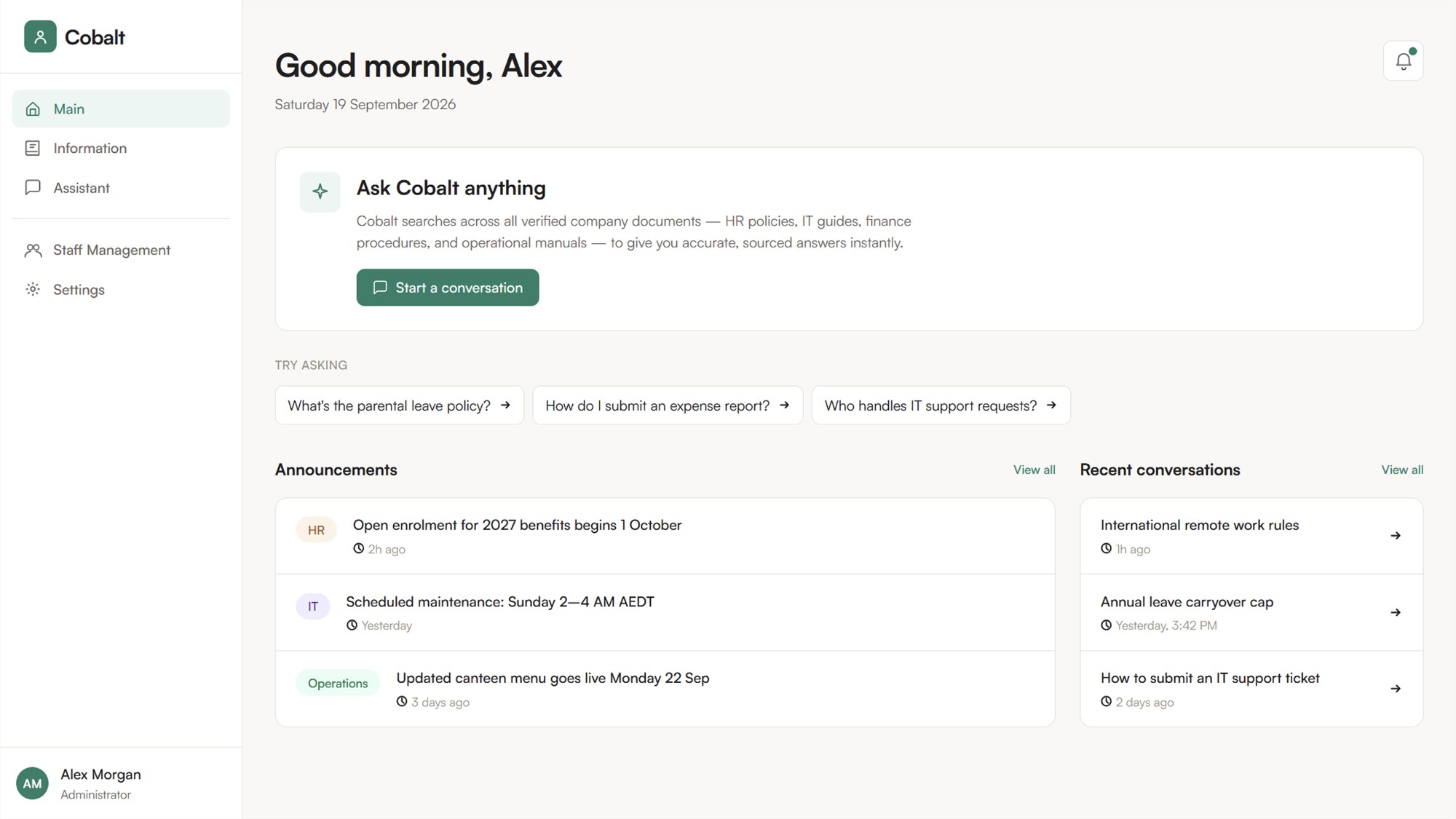
Internal knowledge search and chatbots built around your content: approved answers or RAG with a language model. T-NEX scopes access, data and implementation.
Learn more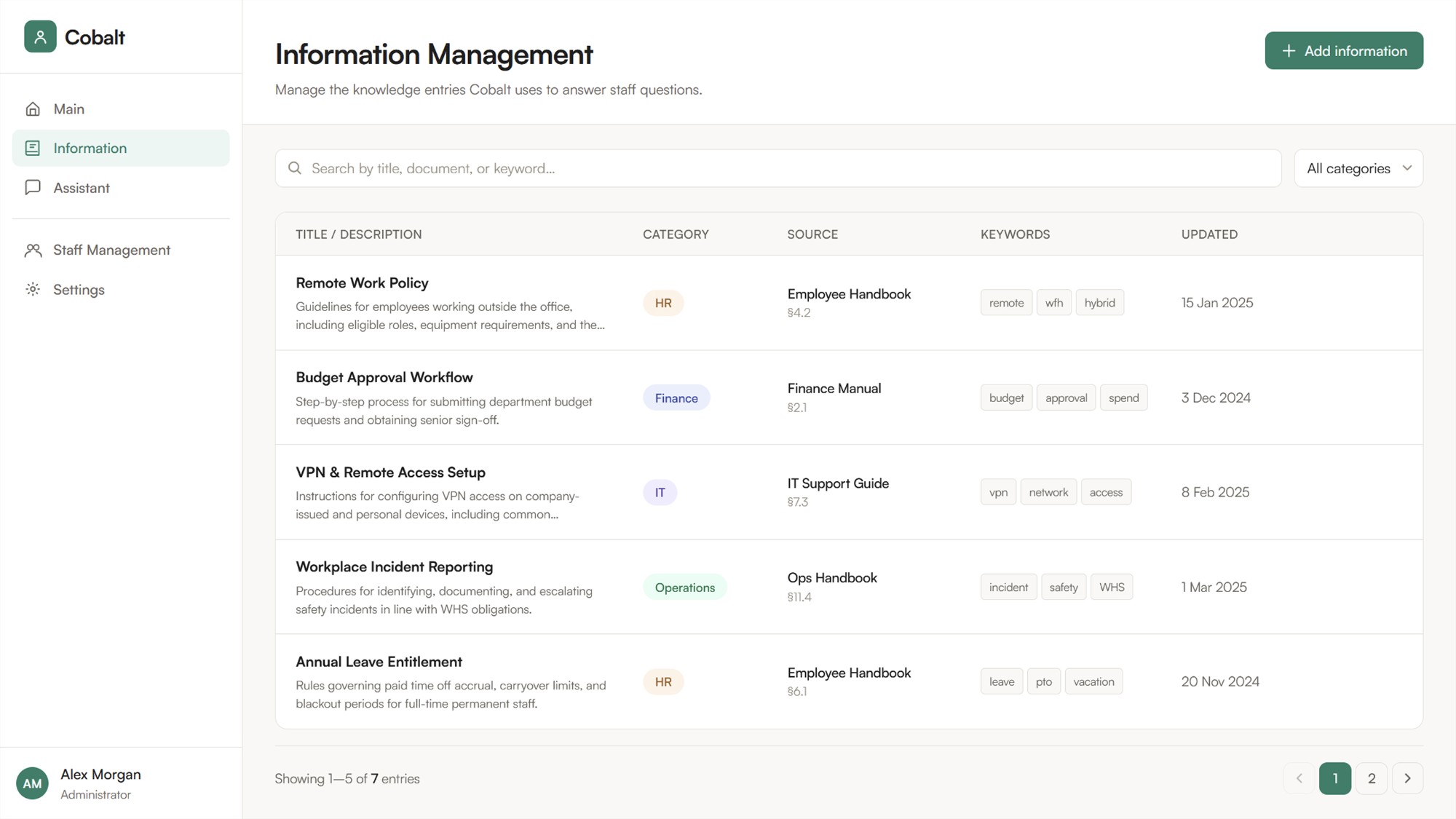
T-NEX designs and builds knowledge systems with source references, evaluating document search, RAG, knowledge graphs and maintained wikis against your questions.
Explore service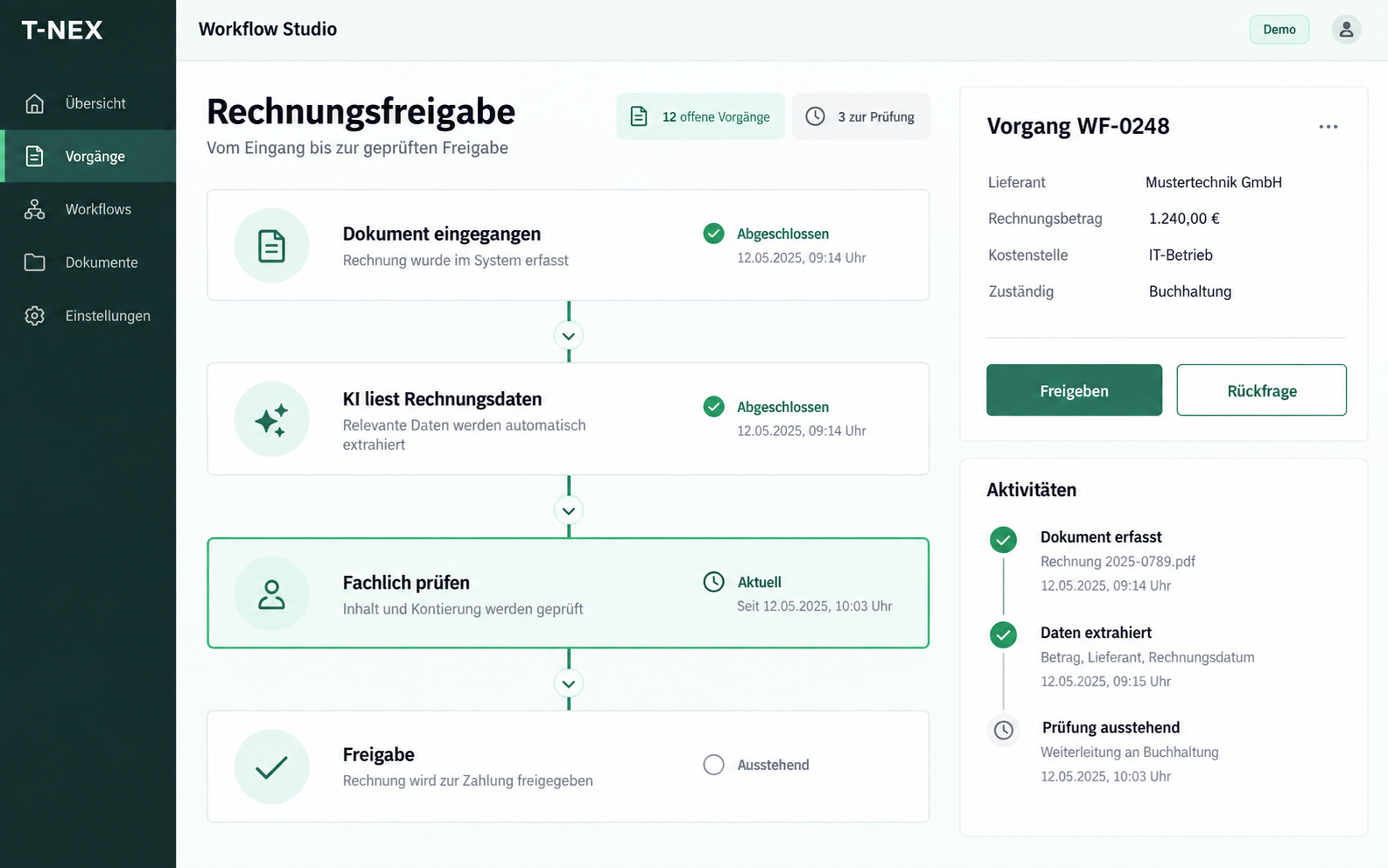
T-NEX develops custom workflows for requests and approvals, adapting existing components with suitable rules and evaluated AI steps.
Explore serviceEvaluate one AI use case with T-NEX: limited scope, suitable data and agreed criteria for expansion or stopping.
Explore serviceBring a concrete task. Together, we will define what the application needs to do.
Discuss your customer service use case