T-NEX Compliance
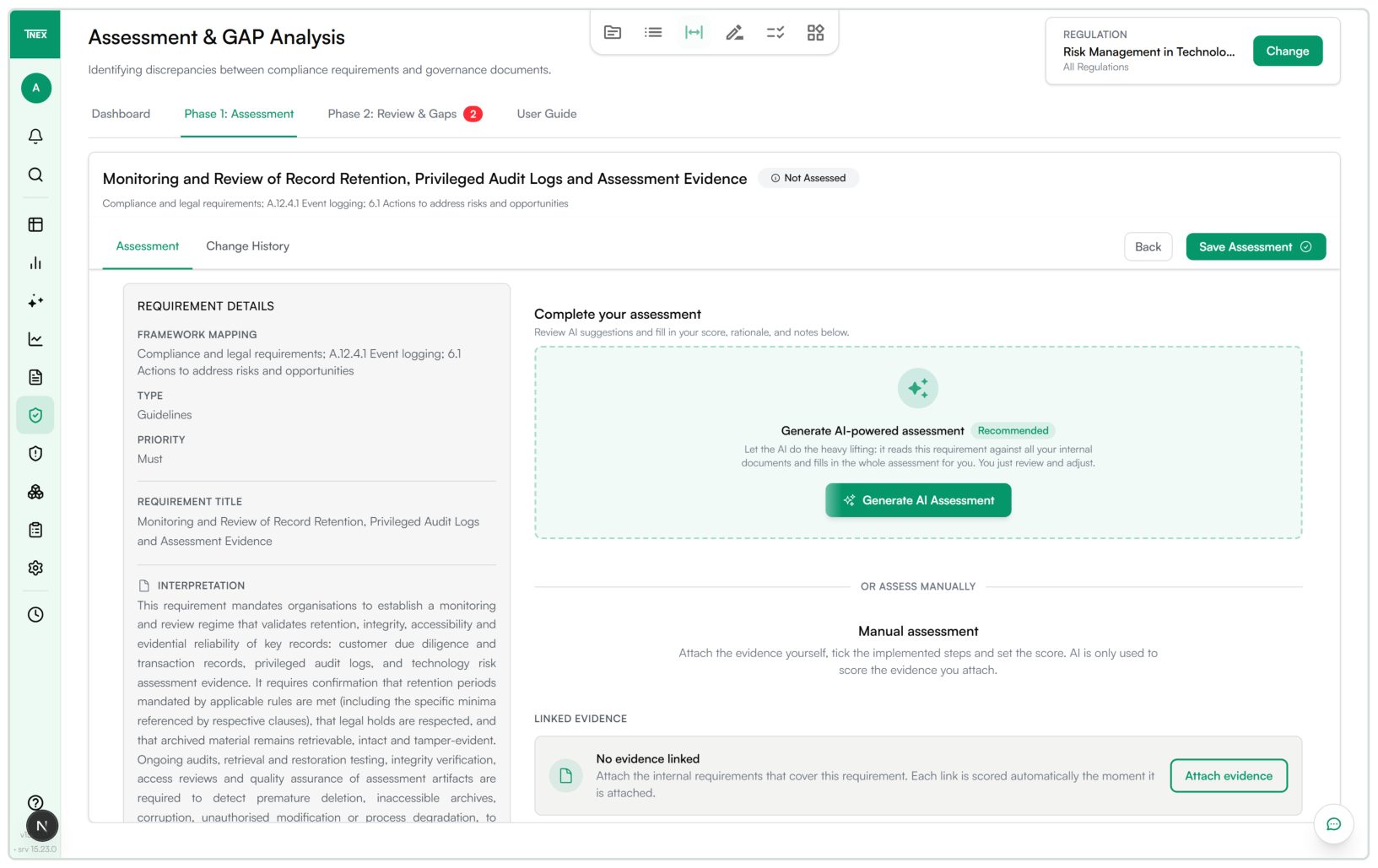
From uploading a regulation to issuing an audit report: T-NEX Compliance connects requirements, assessment, remediation and progress monitoring.
Learn more
Compliance and anti-money-laundering teams need to implement requirements and assess unusual transactions. T-NEX supports both tasks with suitable applications. Information, assessments and decisions stay linked to their professional sources.
Aligned with your processes
For compliance officers, money laundering reporting officers, regulatory analysts and financial-crime investigation teams.
Under section 25a KWG, the independent compliance function forms part of internal control. AML has specific duties: section 5 GwG addresses risk analysis and section 43 addresses suspicious transaction reporting. Software selection therefore starts with the actual task and its decision process.
| Task | Required output | Responsibility in the workflow |
|---|---|---|
| Assess a regulatory change | A requirement with a source, applicability and responsible team | Compliance reviews the business interpretation. |
| Assess implementation of a control | An assessment with internal evidence and any necessary action | The business team supplies evidence; the authorised function assesses and approves. |
| Investigate an unusual transaction | A case decision with evidence, reasoning and next steps | Analysts and the AML function follow the institution’s escalation process. |
T-NEX Compliance links document versions and clauses to requirements, assessments and actions. A changed policy is a useful starting point: the team checks the source clause, identifies the relevant internal rules and decides whether a gap exists.
The demonstration also covers handovers. Clauses, gaps and actions have separate approval points. These allow you to check whether editing and approval match your allocation of responsibilities.
Fraud Detection brings alerts, customer context and supporting transactions into a case file. AI triage supports review. Responsible staff retain the business decision and document their reasoning.
Useful evaluation cases include an explainable rule match, a known false positive and a case with missing data. We also check how the team continues when an AI service fails. A draft report in the module is separate from reviewing and submitting a suspicious transaction report.
The practical test is whether a colleague can understand the case later without a verbal explanation. We agree specific cases for evaluating the software.
For requirements work, bring an approved external rule, an internal policy and an expected assessment result. For monitoring, we use synthetic or expressly approved transactions and expected decisions. This allows a practical comparison of the starting point, working steps and output.
Data access, the operating environment and permitted AI use are defined before rollout. We review workflows with your team and configure appropriate roles and approvals.
Requirements need to be separated by task. T-NEX Compliance covers requirements and their implementation. Fraud Detection supports monitoring and case investigation. KYC, sanctions screening, payment decisions and regulatory submissions need separate consideration within the overall process.
AI prepares suggestions. Business assessment, approval and any reporting follow your institution’s allocation of responsibilities.
We demonstrate the workflow with sample data and compare it with your requirements. Modules, data access, roles and operational services are defined for your installation.
From uploading a regulation to issuing an audit report: T-NEX Compliance connects requirements, assessment, remediation and progress monitoring.
Learn more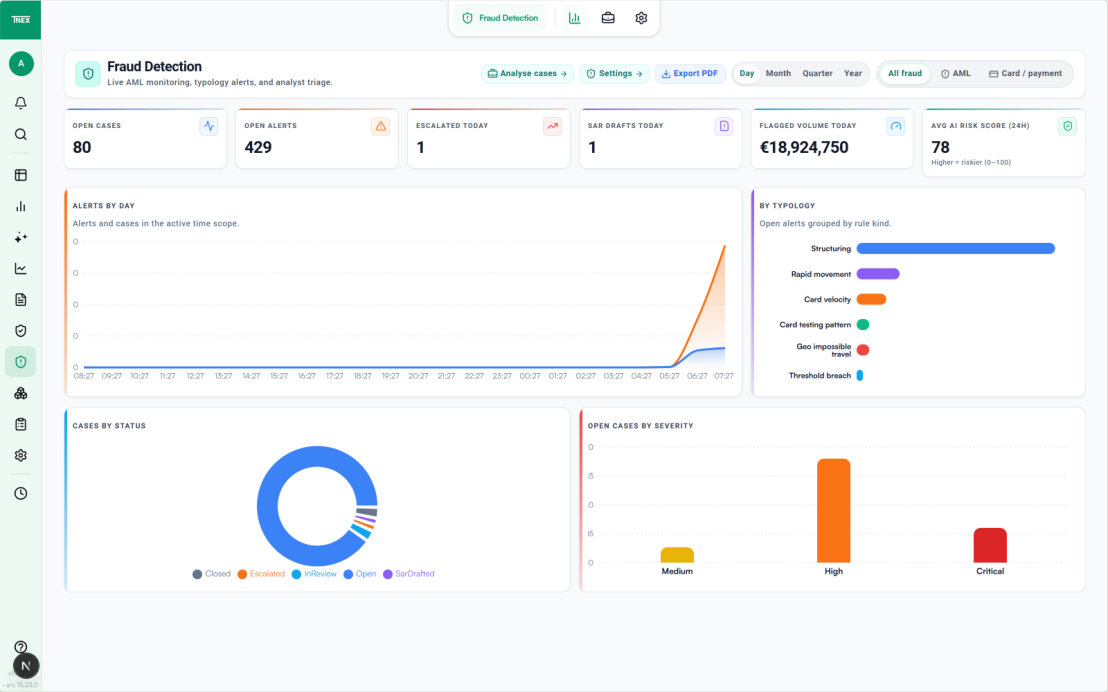
Review transactions, group alerts and investigate cases. T-NEX Fraud Detection connects rules, AI triage, supporting transactions and a traceable audit trail.
Learn more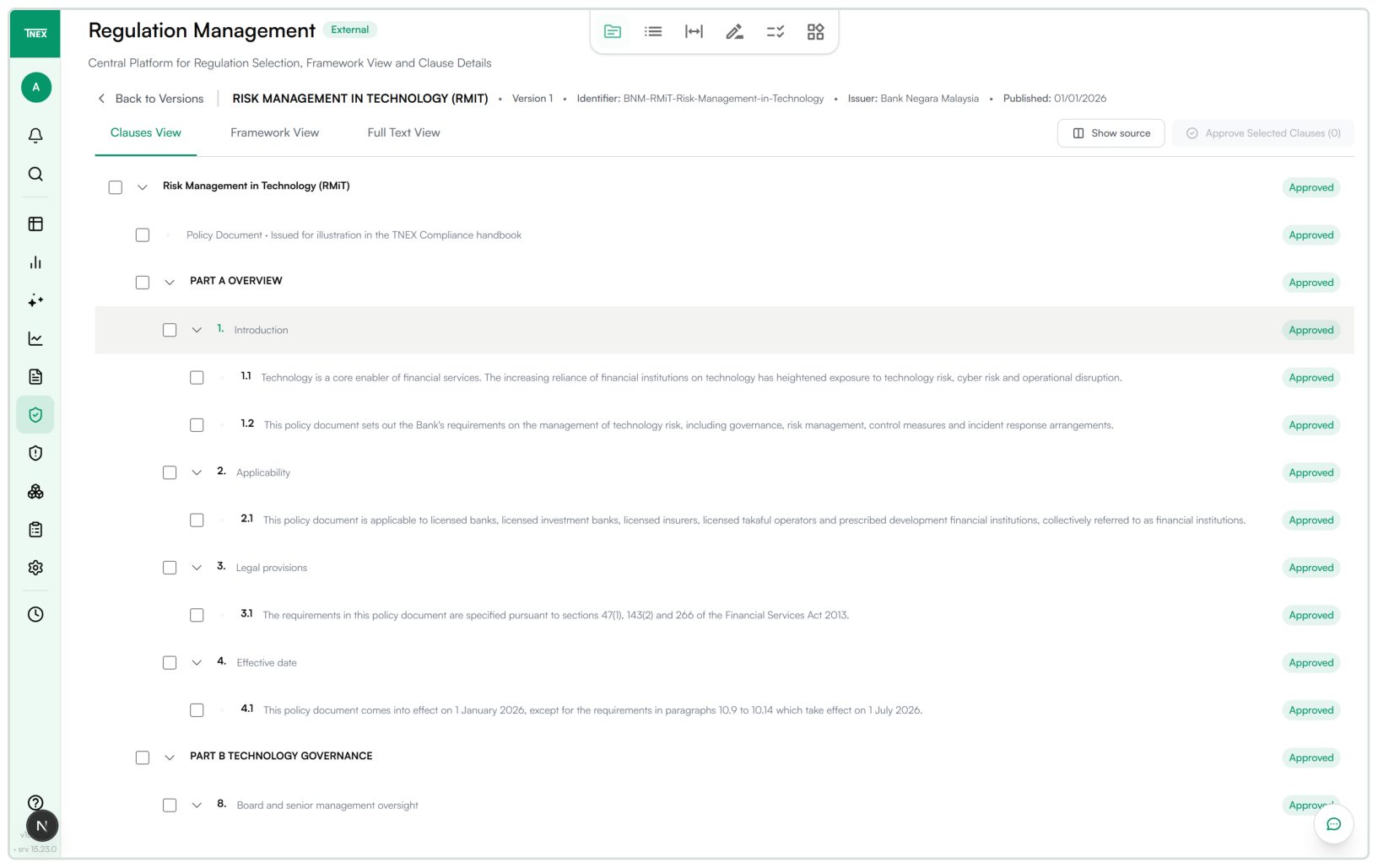
Review regulations as clause trees and derive requirements with source references. Document processing within T-NEX Compliance.
Learn moreFunctions, manual versions and assessment cases for T-NEX Controlling, Compliance, PPM and Fraud Detection, with an editable procurement overview.
Learn moreBring a concrete task. Together, we will define what the application needs to do.
Discuss your compliance workflow