AI and software for skilled trades and SMEs
Handle enquiries, quotations and job documents more effectively. T-NEX develops office workflows and extends the software your business already uses.
Learn more
An AI telephone assistant may be useful for capturing recurring enquiries. Whether it reduces work depends on conversation quality, reliable handover and what happens afterwards. This guide explains requirements to evaluate in a specific system.
For owners and office managers seeking a better way to organise telephone enquiries.
Group typical calls by the result required. Providing opening hours, recording a callback request and confirming an appointment are different tasks. The more a system can decide, the more closely its rules, data access and confirmations need to be assessed.
| Enquiry | Possible scope to evaluate | Workflow boundary |
|---|---|---|
| General question | Answer from approved business information | Refer to a person if information is unavailable |
| Callback request | Capture contact details, reason and availability | Keep the callback open until it has actually been handled |
| Appointment request | Capture preferred time and required details | Confirm only through tested booking rules and integration |
| Unclear or safety-critical matter | Offer a predefined route to a person | No autonomous technical diagnosis or untested urgency decision |
At the end of a call, your team needs a usable record. This may include a name, callback number, reason and clear processing status. Confirm details where recognition errors would prevent the next step. A telephone number, for example, needs to work as a callback destination.
Check for duplicate records and how later corrections are handled. A transfer needs to show whether someone actually answered. An attempted transfer is not a successful handover. Busy or unavailable destinations require an agreed fallback.
Build test cases from expressions commonly used in your business. Add background noise, interrupted sentences, similar names, corrections and follow-up questions. Include callers who do not want automated handling and callers who hang up partway through.
Assess the result from the office’s perspective. Did the correct request arrive? Are key details accurate? Did the system make an incorrect commitment? How much rework remains? Safety-critical issues need a separately defined route to a person. General speech capabilities do not demonstrate reliable emergency assessment.
Use the same expected call volume when comparing suppliers. Beyond a subscription and usage charges, costs may include configuration, numbers, transfers, integrations, storage and support. Establish what is included and how excess usage is charged.
The useful measure is effort per correctly handled request. Include staff follow-up and ongoing content maintenance. A high answer rate can be misleading if your office has to collect the same information again.
| Cost area | Information to provide or request |
|---|---|
| Configuration | Number, call flows, knowledge content and testing |
| Ongoing usage | Call count, duration, concurrency and excess usage |
| Integrations | Target system, calendar access and data transfer |
| Maintenance and operation | Changes, incidents, reporting and contract term |
| Your own work | Review, callbacks and correction of incomplete records |
Article 50(1) of the AI Act addresses disclosure when people interact directly with AI. The Commission confirms application from 2 August 2026. For a telephone flow, a clear announcement at the start is a practical design choice. The exception for an AI interaction that is obvious in context must be assessed for the particular use.
An AI disclosure does not provide blanket permission to record audio. In Germany, section 201 of the Criminal Code protects non-public spoken words against unauthorised recording. Assess stored audio separately and establish which processing and records are necessary and lawful.
Ask which services process speech, what is stored and what reaches your business system. Clarify the legal basis, caller information, processing agreements, access permissions and deletion rules for the intended use. Conversation content, audio and technical logs may have different purposes and retention needs.
Include a telephone or integration outage in the evaluation. Who notices it? What happens to enquiries already captured? How does the office continue? Also agree how your business information can be updated and how required data is returned when you change providers.
Describe how an enquiry becomes a callback, reviewed quotation or order. A telephone channel helps only when ownership and subsequent handling are clear. Supplier selection should follow these requirements and the test results.
T-NEX develops workflows and knowledge access for handling such cases. These existing services can support the work after an enquiry. Telephone integration, speech processing and transfers require a separate assessment. This guide covers selection and does not offer a ready-made T-NEX telephone product.
A clearly bounded intake task, such as a callback request with confirmed contact details. The office can immediately assess whether the record is complete and correct.
Only include this if the calendar, permissions, booking rules and confirmations work reliably together. Otherwise, a preferred appointment time should remain labelled as a request.
A meaningful comparison needs call volume, contract term, configuration scope, integrations and ongoing support. Add your own follow-up work. A generic monthly price would hide these differences.
No. AI disclosure and lawful audio recording are separate questions. Assess the relevant data protection requirements and protection of spoken words for the specific processing.
Its general capabilities do not establish reliable emergency assessment or response availability. Safety-critical matters need a separately defined and available route to a person.
Handle enquiries, quotations and job documents more effectively. T-NEX develops office workflows and extends the software your business already uses.
Learn more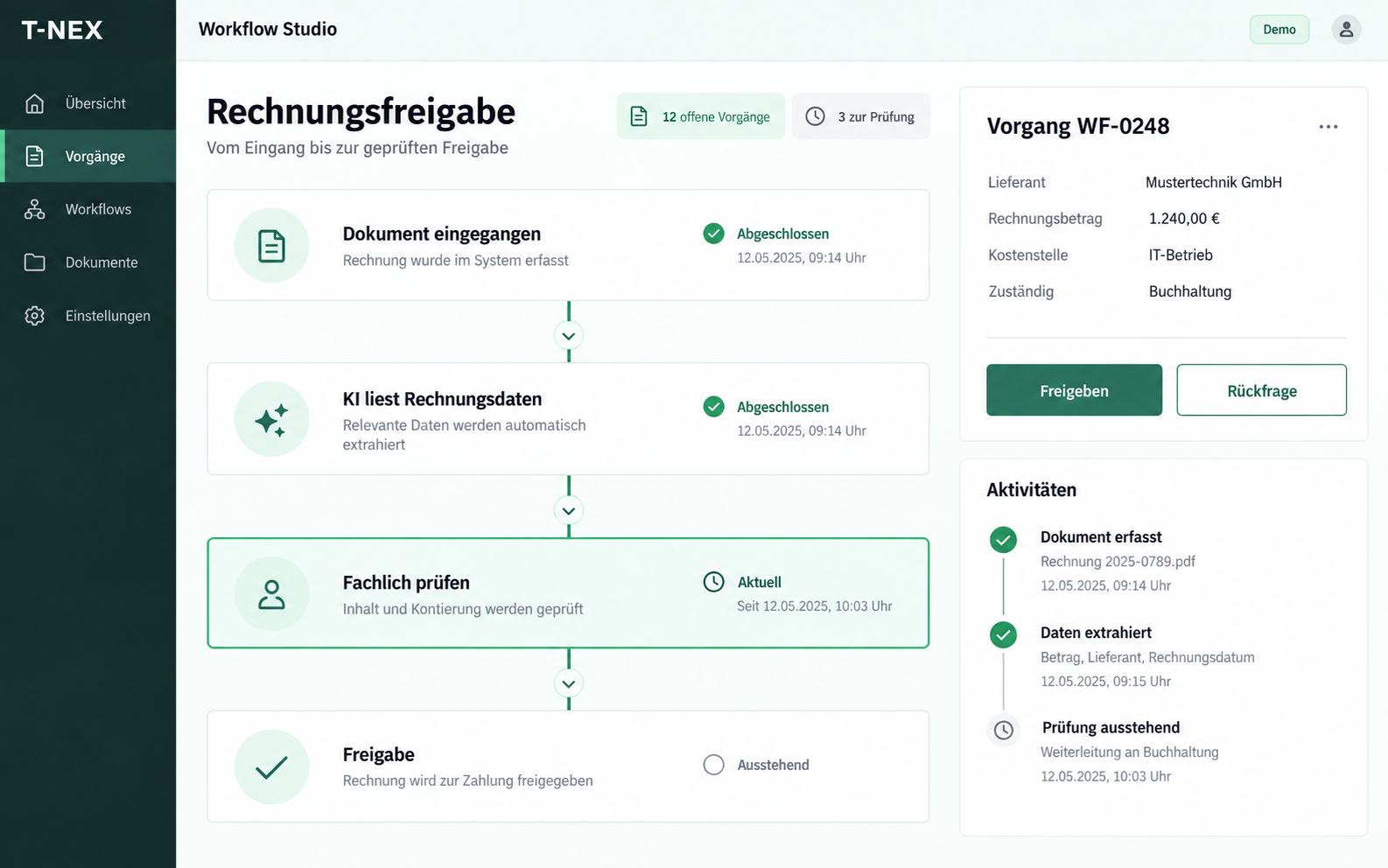
T-NEX develops custom workflows for requests and approvals, adapting existing components with suitable rules and evaluated AI steps.
Explore service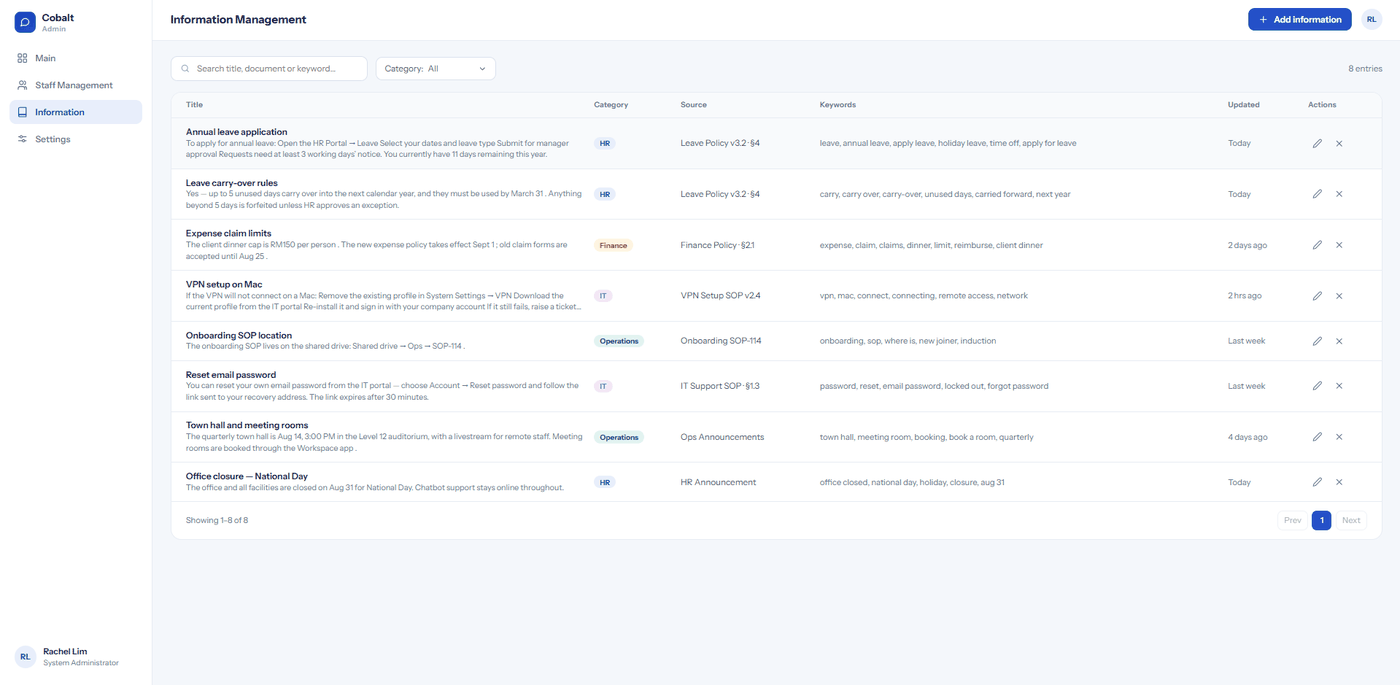
Internal knowledge search and chatbots built around your content: approved answers or RAG with a language model. T-NEX scopes access, data and implementation.
Learn moreUnderstand Article 50 AI Act notices for chatbots, machine-readable marking, deepfake disclosure and editorially reviewed text in business workflows.