AI agents for 14 tasks
The 14 tasks for which T-NEX builds AI agents, with the shared components, a pilot with a measurable goal and the rules for running the agents.
Learn more
T-NEX builds AI agents for factories, plantations and warehouses: maintenance and knowledge assistants for technicians, processing of inspection records, delivery and freight documents, order and stock queries in natural language, and custom software for operations.
Aligned with your processes
The agents work with what your business already has: work instructions and maintenance documents, inspection records, delivery notes and freight documents, and the order and stock data in your systems. Which of these areas we start with is agreed in the project.
For maintenance we combine knowledge management and a chatbot. AI knowledge management sets up the selection and upkeep of the sources, and the AI chatbot makes them available in dialogue and shows maintained answers with their recorded source. An additional RAG function can compose answers from retrieved document passages; this stage is developed and tested as a separate scope. Tables, attachments and differing document versions often hold details that a summary leaves out, so the review process provides a path from a hit back to the original.
Document AI processes inspection records and delivery and freight documents. It combines text recognition, classification of the document type and extraction of the required information. A target schema is agreed for each document type. A direct posting or order creation is built only if it expressly belongs to the workflow.
T-NEX Dynamic AI Reporting answers order and stock questions on the connected data source; we develop the connection to your system in the project. Software for operating workflows is built as custom software, early on as a clickable prototype. We design work queues, clarification requests and the log based on the workflow automation concept, whose specific actions we develop for your business.
A maintenance assistant may use only information intended for the audience it serves. Access roles are therefore defined before sources are connected. For missing evidence, a clear response path is set up: insufficient information, a clarifying question or handover to the responsible team.
For documents and analyses, recognising a value is not yet a business sign-off, and a generated dashboard establishes neither that your data is complete nor that an interpretation is correct. We name in advance who checks and releases a result. Which content an AI model may receive is decided for each use case; data locations and access for development and support are described before setup.
A pilot tests the workflow on your own examples, including difficult ones: poorly legible passages, missing values, differing formats and questions without a matching source. For mobile applications we look at the intended devices and the connection conditions on site. Support hours and availability are agreed for the specific application.
The register of AI providers in Malaysia lists further providers for this task, including solutions for automation and robotics, quality inspection and machine vision, warehousing, fleet and supply chain, and plantations, agriculture and food. This page describes only what T-NEX builds itself.
All 14 tasks for which T-NEX develops AI agents are listed in the overview.
Choose a use case: We begin with a defined, recurring task, such as a document type like the delivery note, a maintenance area with frequent questions or a query that is compiled by hand today, and check whether documents, data and responsible people exist for it.
Pilot with a measurable goal: Together with your domain team we define what a correct result is and which errors are not acceptable. Examples from your business, including difficult ones, measure correctly transferred values, missing information, answer quality and the correction effort needed.
Set access and sign-off: Audiences, released sources, the response path for missing evidence, the check by your domain team and a log of action, time and person handling it are fixed before the agent goes into operation.
Operation and expansion: Only after the pilot do we extend document types, sources, sites or users. Hosting, support and handover are agreed for the specific application.
The agent is designed to read inspection records and delivery and freight documents. For each document type we agree a target schema with the required fields and include difficult cases from the start: poorly legible passages, several possible dates, missing or contradictory values. Unclear information is made visible, and your domain team confirms or corrects a proposal against the original before it moves to the next step. Recognising a text does not replace a business sign-off.
This is intended for questions in natural language put to a connected data source; the result appears as a table, key figure or chart. Each source needs a connection to the respective system, which we develop in the project. Beforehand we define data ownership, field mapping and access rights and decide what a language model may see. We start with one reliable data source and one query, and further ones follow after the pilot. Whether a workflow also writes back to the system is defined separately.
No. The agents described here work with the documents, texts and data of your business: they answer questions, read documents, analyse data and support workflows. Machine control, robotics, camera-based inspection and failure prediction models are not part of what this page describes. The register of AI providers in Malaysia lists further providers for these. Maintenance documents, inspection records and order data around such equipment, however, can be part of a project.
The 14 tasks for which T-NEX builds AI agents, with the shared components, a pilot with a measurable goal and the rules for running the agents.
Learn more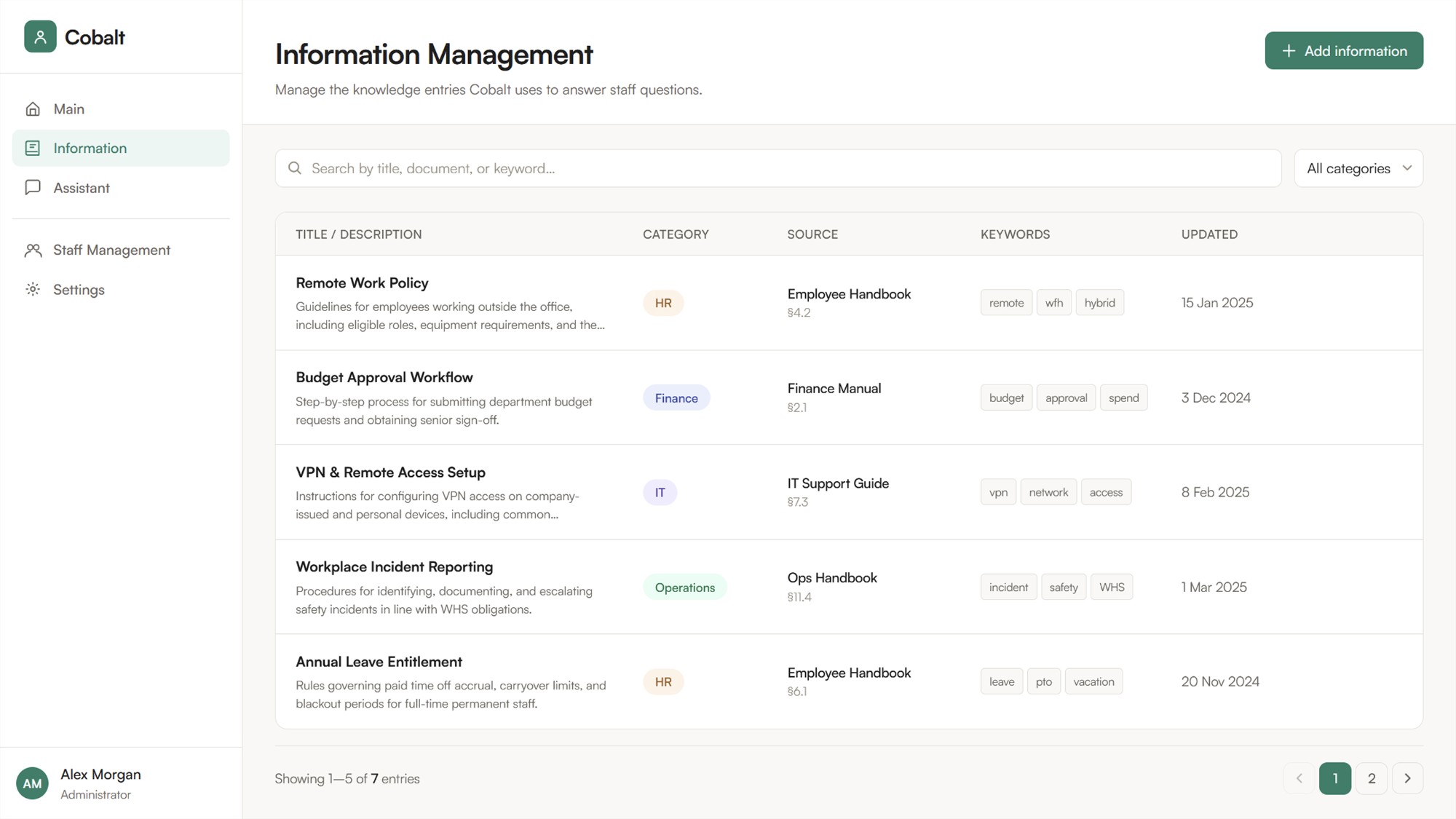
T-NEX designs and builds knowledge systems with source references, evaluating document search, RAG, knowledge graphs and maintained wikis against your questions.
Explore service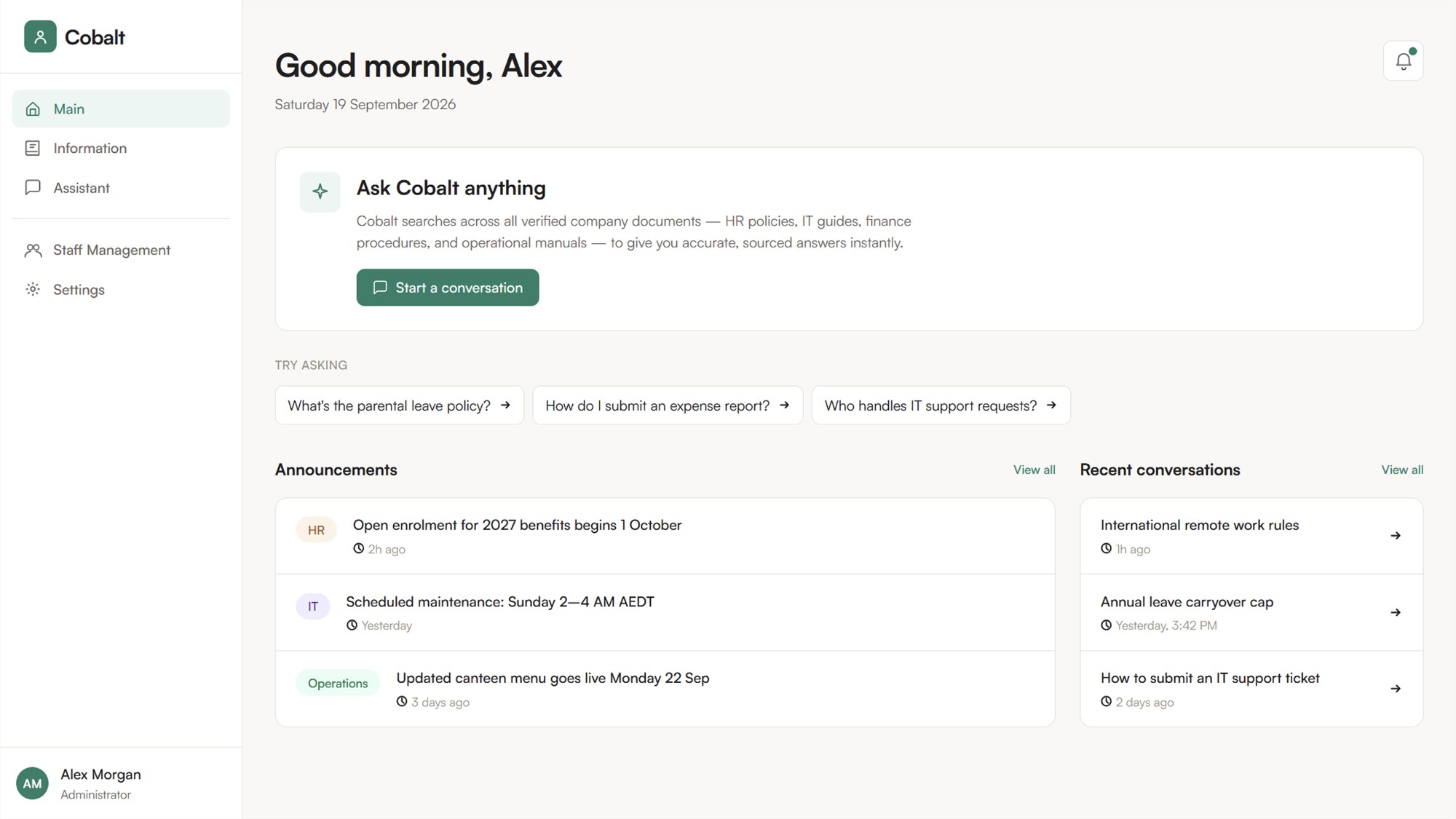
Internal knowledge search and chatbots built around your content: approved answers or RAG with a language model. T-NEX scopes access, data and implementation.
Learn moreDocument processing as a custom project: define required fields, test extraction against examples and connect the next step in your workflow.
Explore service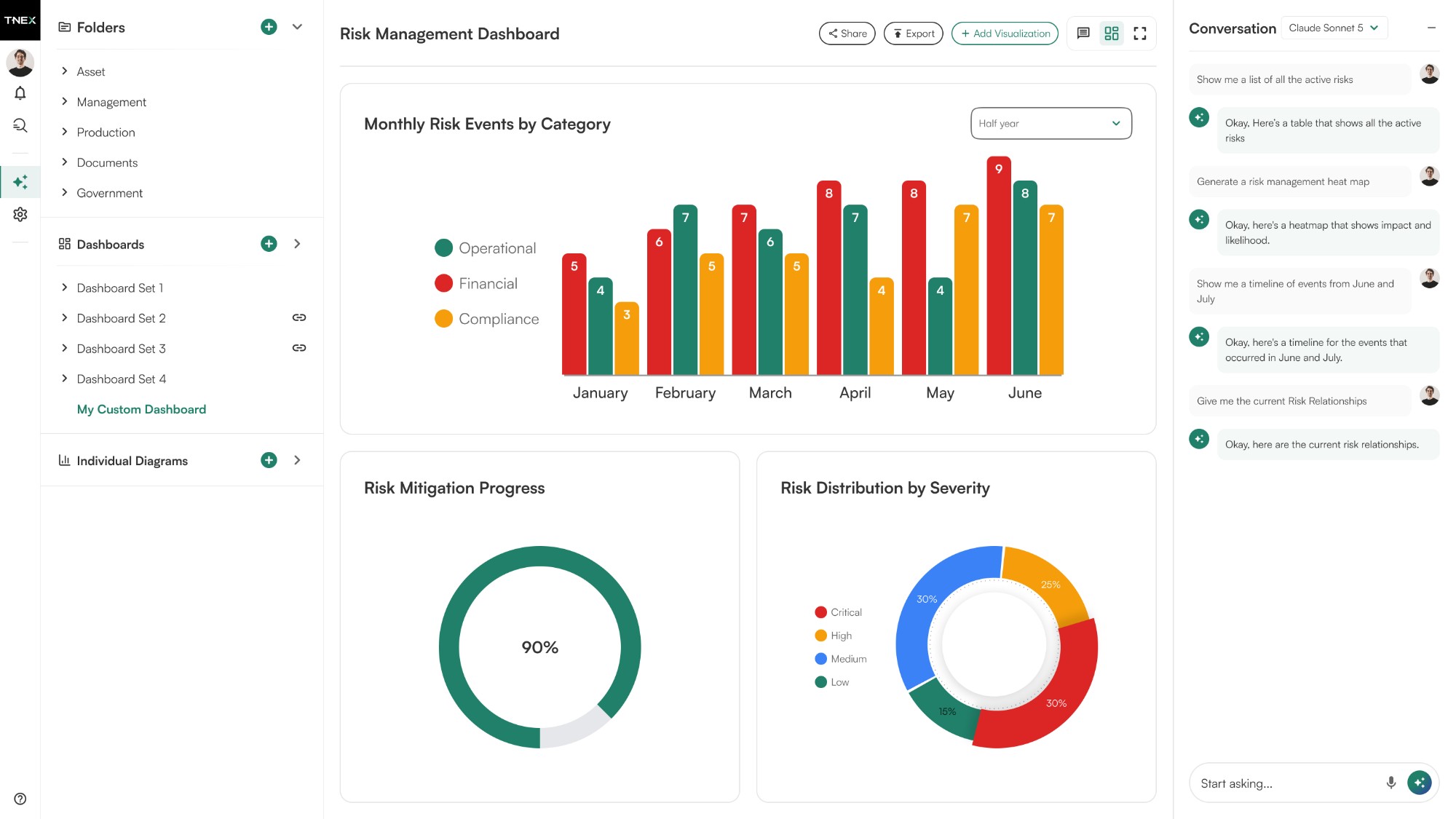
Dashboards from natural-language questions: T-NEX Dynamic AI Reporting for companies, with editable charts, role-based permissions and PDF export.
Learn moreBring a concrete task. Together, we will define what the application needs to do.
Discuss a manufacturing or logistics use case