AI agents for 14 tasks
The 14 tasks for which T-NEX builds AI agents, with the shared components, a pilot with a measurable goal and the rules for running the agents.
Learn more
T-NEX builds AI agents for facility and energy management: capturing and routing fault reports, searching maintenance documents and equipment data, producing consumption and maintenance reports, and custom software for building operations.
Aligned with your processes
The agents work with what building operations already produce: reports from users and technicians, maintenance schedules and manuals, consumption values in spreadsheets and databases. We agree in the project where we start.
If a fault report arrives as a document, such as a form or a maintenance record, document AI turns the required details into a record that sits beside the original for checking. The path of a report from intake to completion follows the principles of workflow automation: status, responsibility and a work queue. Fixed rules handle clear assignments, and the AI prepares unstructured details. The solution pattern on the workflow automation page is a concept example; the actual system actions are developed for your business.
For questions about manuals and maintenance instructions, the AI chatbot with source references is used. It finds maintained answers and shows the recorded source. Behind it, AI knowledge management keeps the documents connected to their origin and owner; when a maintenance instruction changes, that can trigger a new review of linked knowledge pages. A supplementary RAG function that formulates answers from document passages is developed and tested as a separate scope.
Consumption and maintenance reports, and queries on equipment data, are produced in AI reporting (T-NEX Dynamic AI Reporting). A business question becomes a dashboard on the connected data source. Viewing and editing permissions are granted separately by role. What these components do not cover, such as a fault-reporting portal for building users or mobile capture on inspection rounds, we develop as custom software.
Fault reports, maintenance documents and consumption data are not meant for every party in the same way. Before connecting anything, we define which sources the agent may use and which roles may see and edit what, for example building users, facility technicians and external service providers. An answer must not reveal content that is not intended for the person asking.
The agent assigns and proposes. For missing evidence we set up a clear answer path: not enough information, a follow-up question or handover to the responsible team. For changes we define which actions are logged, with the time and the person who made them, so it stays clear what a case is waiting for. A generated report establishes neither that the data is complete nor that a business interpretation is correct; who interprets and releases it is named in advance.
Fault reports often contain names and phone numbers. Whether personal details need to reach an AI model is clarified beforehand and recorded in the project documents. We describe data locations, access for development and support, and the services involved before setup. Before operation, a pilot tests the agent on ordinary reports, different wordings and cases without a suitable answer.
The register of AI providers in Malaysia lists further providers for this task, including solutions for video analysis, access and parking, building operations and smart cities, and for energy, environment and ESG. This page describes only what T-NEX builds itself.
All 14 tasks for which T-NEX develops AI agents are listed in the overview.
Choose a use case: We start with a defined area, for example the fault reports of one building or the questions about the maintenance documents of one type of equipment. Then we check whether reliable documents and a responsible person for the content exist. Roles and released sources are set before anything is connected.
Pilot with a measurable goal: Together with your facility team we agree what a correctly captured and routed report is and which errors are not acceptable. The pilot measures accuracy, source reference, handling time and the human intervention actually needed, including unclear reports and questions without an answer.
Operation and extension: Only after the pilot do we add buildings, sources or users. Logging, responsibilities, support and response times are agreed for the specific application.
No. The agents capture reports, route them, search documents and data and produce reports. They do not switch or regulate equipment and do not replace established emergency or alarm procedures. Which data from an existing system can be made available, for example as a file handover or through an interface, we check against the system in question.
No. This offering covers facility and energy management with fault reports, documents, data and reports. Video analysis on cameras and the measurement of environmental values are not part of it. The register lists further providers for these areas.
It does not guess. The reply says the information is not sufficient, asks a follow-up question or hands over to the responsible team. Such questions also show which details are missing from the documents. Who closes these gaps and releases a corrected answer is agreed during setup.
The 14 tasks for which T-NEX builds AI agents, with the shared components, a pilot with a measurable goal and the rules for running the agents.
Learn moreDocument processing as a custom project: define required fields, test extraction against examples and connect the next step in your workflow.
Explore service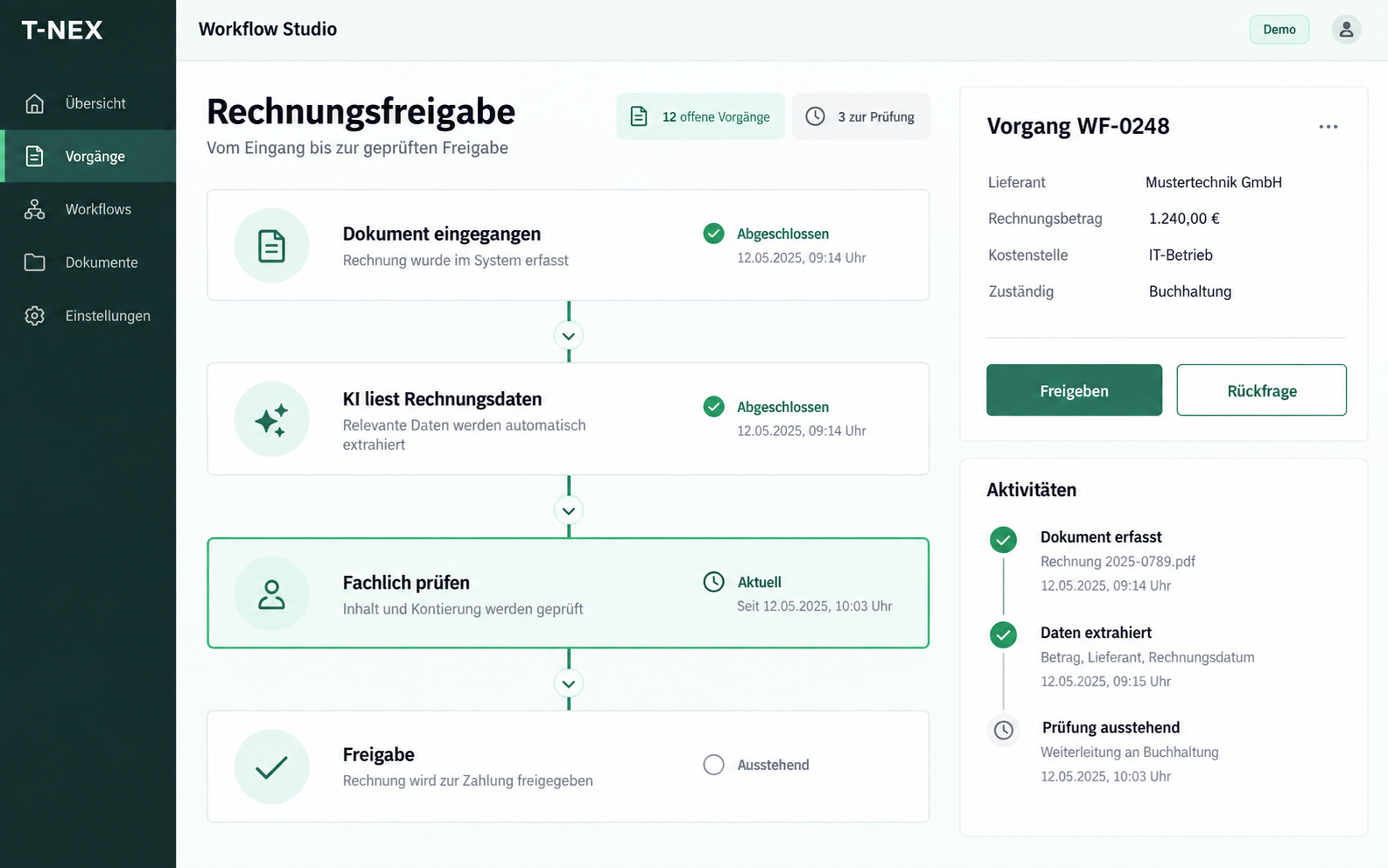
T-NEX develops custom workflows for requests and approvals, adapting existing components with suitable rules and evaluated AI steps.
Explore service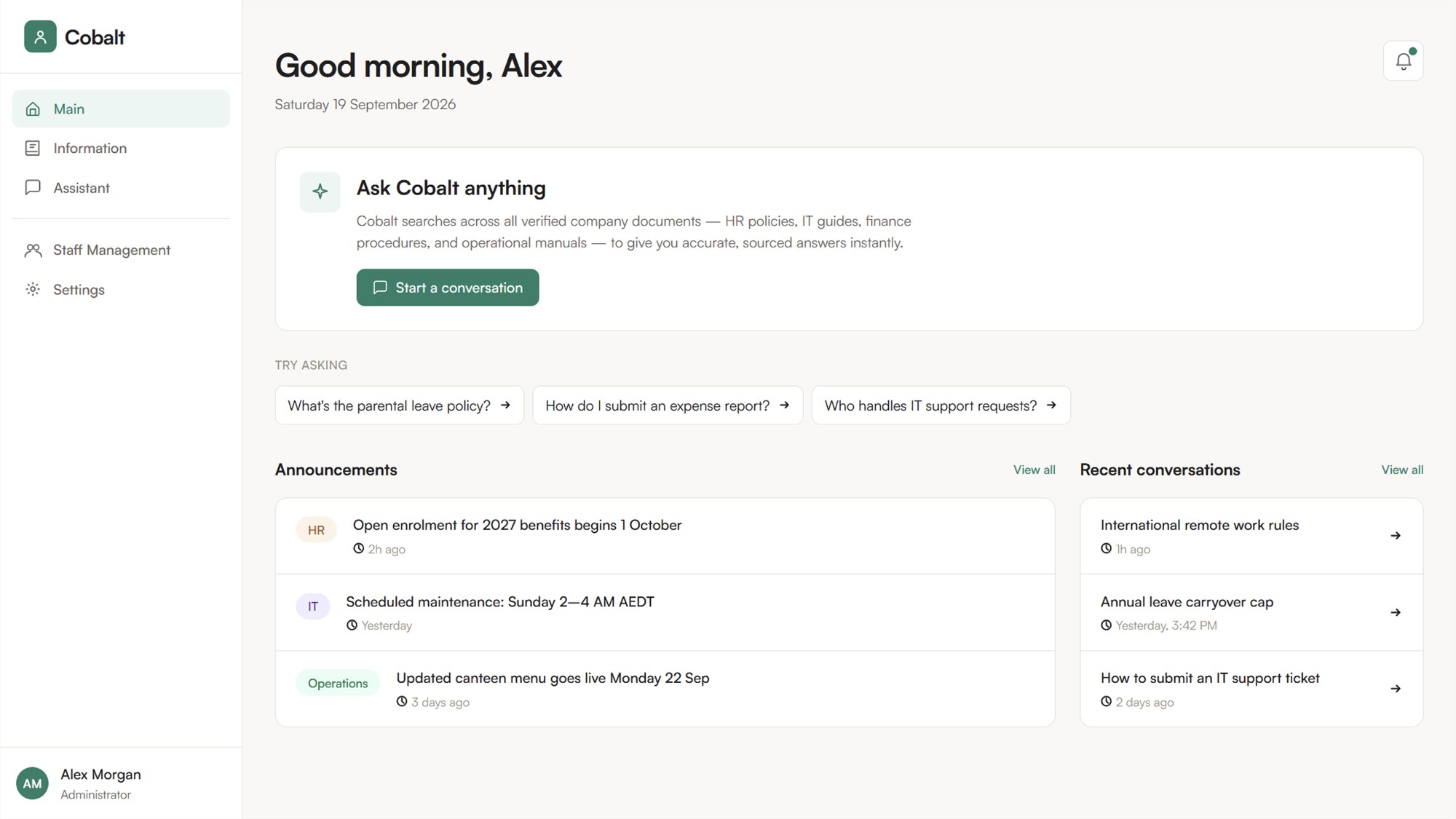
Internal knowledge search and chatbots built around your content: approved answers or RAG with a language model. T-NEX scopes access, data and implementation.
Learn more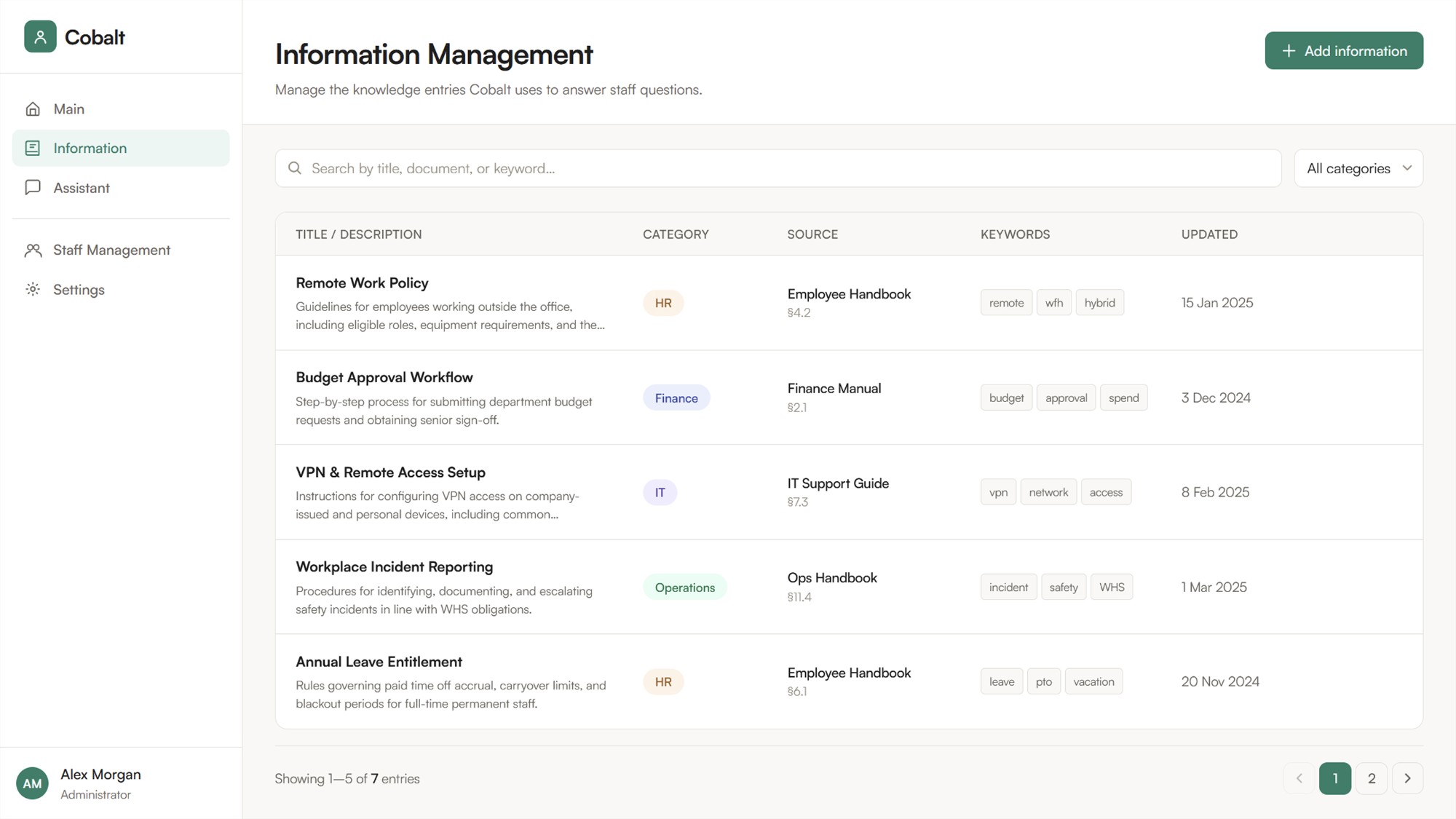
T-NEX designs and builds knowledge systems with source references, evaluating document search, RAG, knowledge graphs and maintained wikis against your questions.
Explore serviceBring a concrete task. Together, we will define what the application needs to do.
Discuss a building operations use case