AI agents for 14 tasks
The 14 tasks for which T-NEX builds AI agents, with the shared components, a pilot with a measurable goal and the rules for running the agents.
Learn more
T-NEX builds AI applications and custom business software to order, from requirements to operation. In Malaysia, TNEX MALAYSIA SDN. BHD. builds business software for small and mid-sized companies. For AI agents, T-NEX uses its own components: knowledge assistants, document processing, chatbots and workflow automation.
Aligned with your processes
T-NEX develops applications for tasks your existing software does not adequately support, and adds AI where it fits the workflow. The starting point is the people, data and decisions within the actual process.
Before anything is built from scratch, we review what already exists and can stay. Sometimes a targeted addition is enough.
For AI agents, T-NEX uses its own components. Which of them appear in your application follows from the task.
Behind these sits custom development: roles and permissions, configurable forms, status workflows, data imports and reports are among our development building blocks. We reuse them when function, technology and usage rights fit your project, and build your business logic on top. Reusable platform components and AI in development are meant to shorten the path to a usable application.
Before the larger build, your team receives an early, clickable design of the interface and workflows. It shows how a record is created, what each role sees and what happens when information is missing.
For AI applications, we agree a pilot with objectives, scope and success criteria before building, and define which data the application may access. A successful pilot is not yet a finished production solution. The functions and evidence still missing for operation are named as next steps.
Responsibilities for source code, access, configuration and operating documentation are settled from the start. The proposal records which results are handed over and which usage rights apply. T-NEX sets up the operating environment by agreement, in your own accounts or with arranged infrastructure. Data locations and access are clarified beforehand.
On its page for this task, the register of AI providers in Malaysia lists software houses, AI studios and IT service companies that build applications to order. This page describes only what T-NEX builds itself.
All 14 tasks for which T-NEX develops AI agents are listed in the overview.
Choose a use case: Together we describe how the task is handled today and pick a defined workflow with a clear input and outcome. We also check what can stay in your existing software.
Agree the design and rules: Your team reviews a clickable design. Data access, approvals and logging are settled before the application touches your data. For integrations, data ownership and field mapping are defined.
Pilot with a measurable goal: We agree objectives, scope and success criteria. The business team assesses results, errors and the correction effort actually needed on your sample data, not only the most convincing cases.
Handover and operation: The proposal states which results are handed over, which usage rights apply and who fixes defects or implements business changes. Support and operating tasks are agreed for the actual application.
Both. T-NEX builds AI applications and custom business software to order. Whether a task needs AI follows from the workflow: clear decisions can be represented through fixed rules, while AI prepares unstructured information or draft text. Before starting new development, we also review what can stay in your existing software.
We record that in the proposal: which results are handed over and which usage rights apply. Responsibilities for source code, access, configuration and operating documentation are settled from the start. We reuse components only when function, technology and usage rights fit your project. External services your solution needs are also named in the proposal.
A successful pilot is not automatically a finished production solution. At the end we name operation, permissions, ongoing data maintenance and ownership, as well as the functions and evidence still missing for use. For operation, T-NEX can set up the environment and take on agreed tasks such as updates, backups and support. You can also hold the infrastructure accounts yourself. Support hours, response times and availability are agreed for the actual application.
The 14 tasks for which T-NEX builds AI agents, with the shared components, a pilot with a measurable goal and the rules for running the agents.
Learn more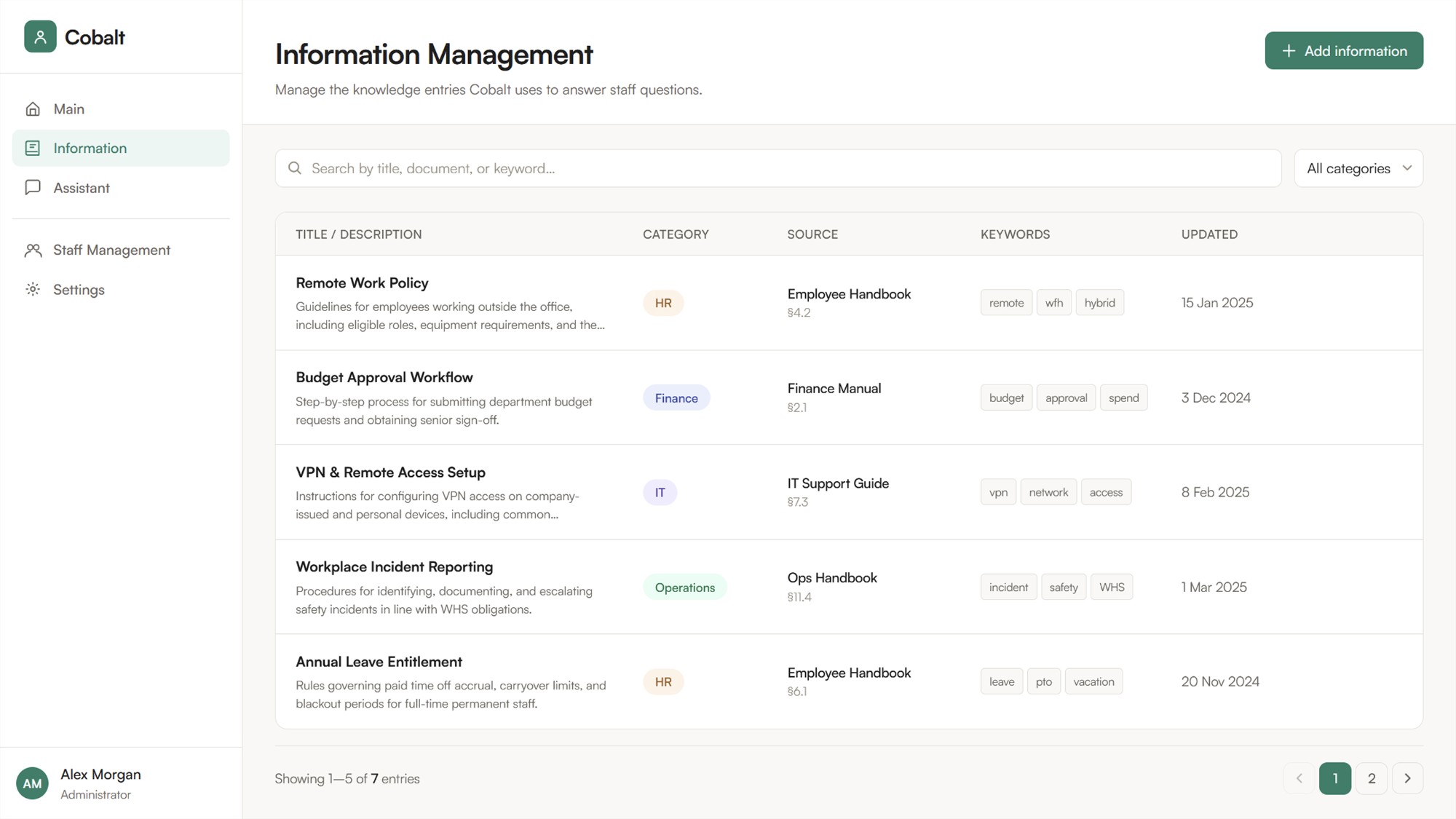
T-NEX designs and builds knowledge systems with source references, evaluating document search, RAG, knowledge graphs and maintained wikis against your questions.
Explore serviceDocument processing as a custom project: define required fields, test extraction against examples and connect the next step in your workflow.
Explore service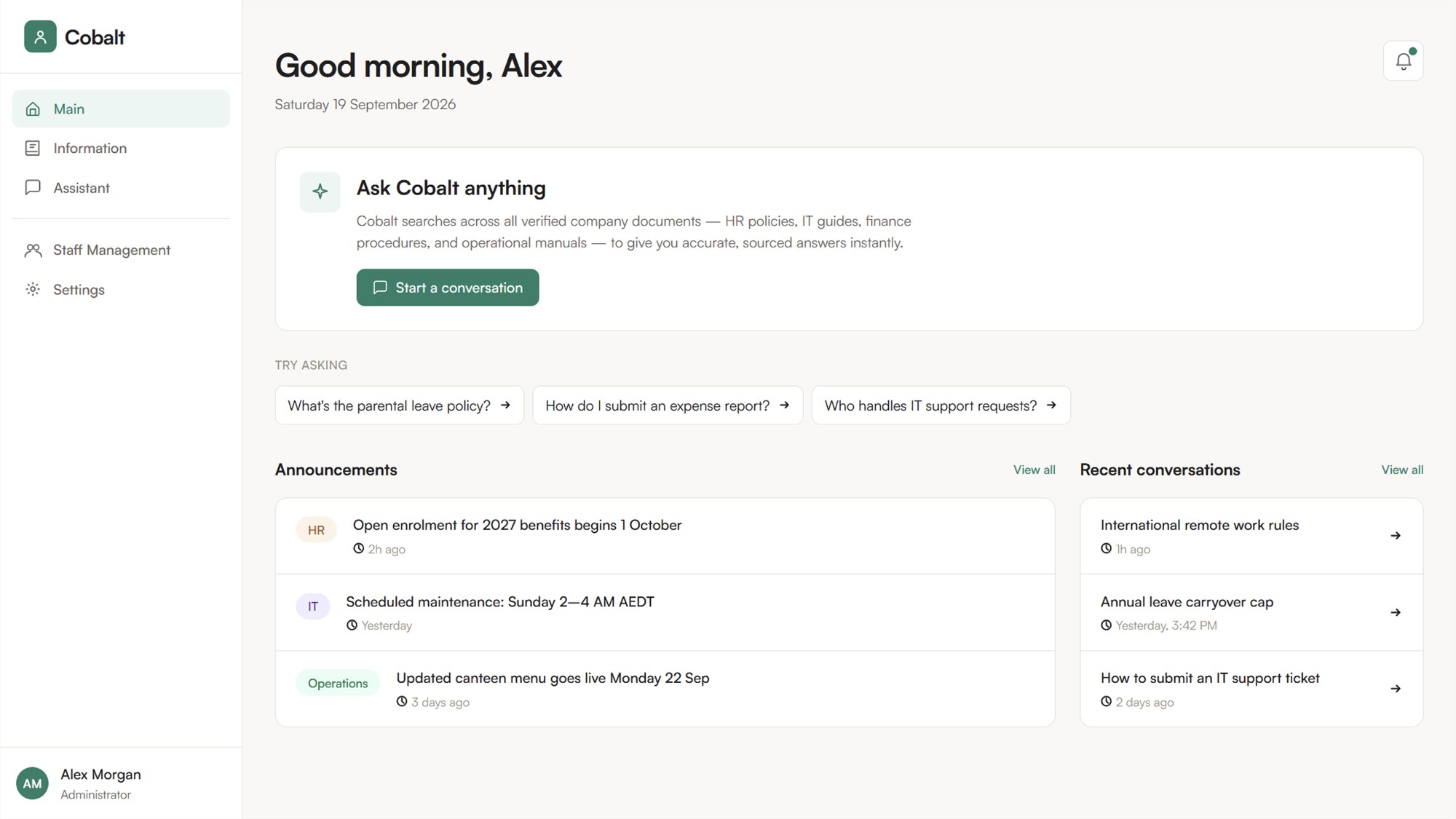
Internal knowledge search and chatbots built around your content: approved answers or RAG with a language model. T-NEX scopes access, data and implementation.
Learn more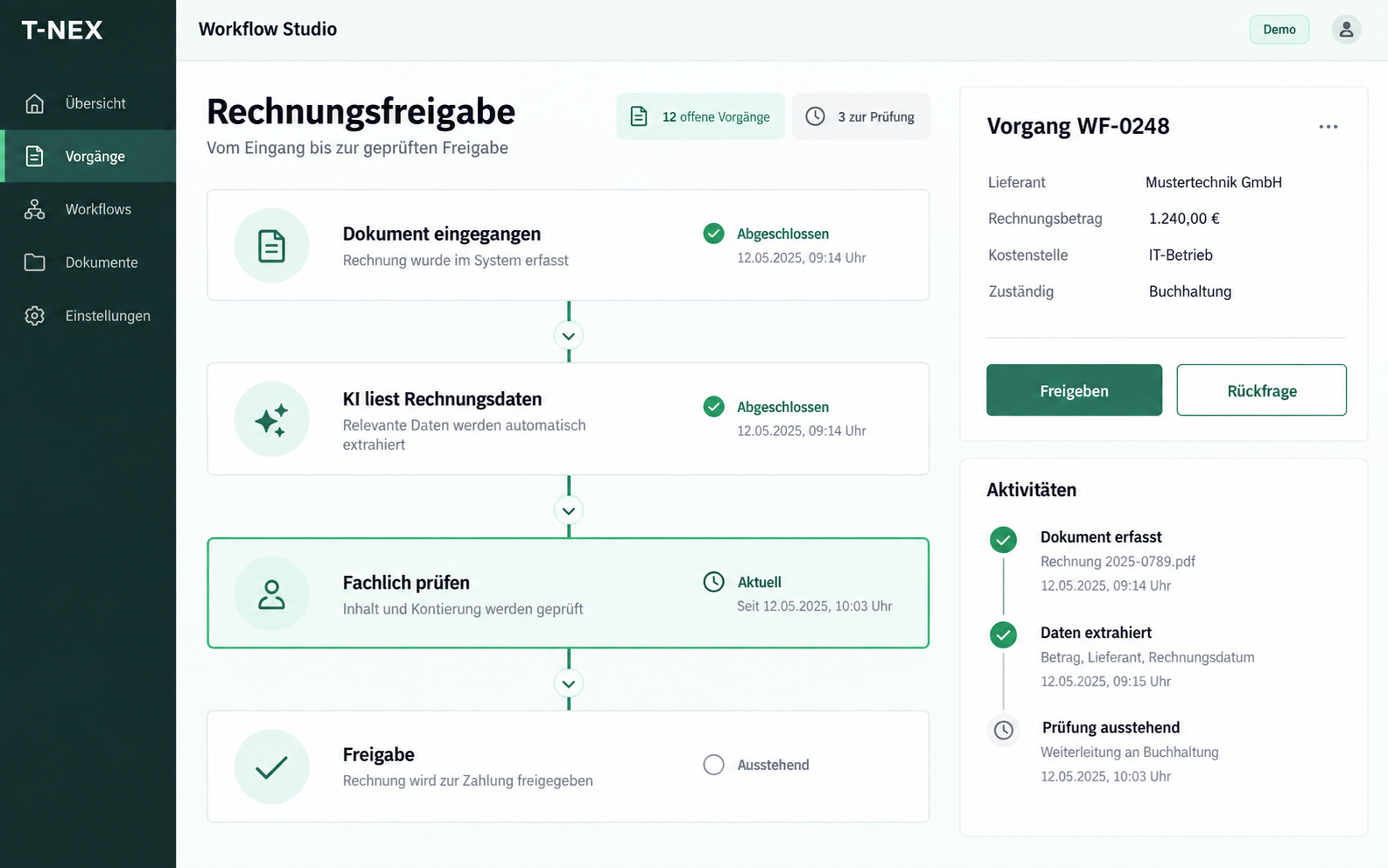
T-NEX develops custom workflows for requests and approvals, adapting existing components with suitable rules and evaluated AI steps.
Explore serviceBring a concrete task. Together, we will define what the application needs to do.
Discuss your software project