AI agents for 14 tasks
The 14 tasks for which T-NEX builds AI agents, with the shared components, a pilot with a measurable goal and the rules for running the agents.
Learn more
T-NEX helps companies find the right starting point for AI agents: selecting and assessing use cases, running a pilot with a measurable goal and setting rules for data access, approvals and logging before the agent goes live.
Aligned with your processes
Before an agent is built, we clarify which task is the right one to start with. We look at the process as it runs today, the documents and systems behind it and the people who check the result.
A suitable case is clearly bounded, with a defined input and a result that can be checked, and it has reliable documents and people responsible for their content. Where those are missing, the work begins with the sources rather than with the agent.
An agent that answers questions, reads documents or passes on data needs clear limits. We record them in the project documents before it works with your data in operation. For the pilot this applies earlier: we determine in advance which data may be used in testing.
The pilot follows the T-NEX approach for AI pilots. The baseline process and the expected outcome are recorded, the sample data includes typical cases and foreseeable exceptions, and the business team reviews errors and limits as well as the most convincing examples. A successful pilot is not yet a finished production solution.
Which components the agent receives depends on the task. The AI chatbot finds maintained answers and shows them with their recorded source, AI knowledge management keeps responsibilities and access rights linked to the sources, document AI recognises details in documents and presents unclear passages for review, and AI reporting turns a business question into a dashboard on the connected data. Workflow automation separates rules, AI proposals and approvals. The solution pattern for it is a concept example; the actual system actions are only developed when the solution is built for your business.
T-NEX sets up operations by agreement. Responsibilities, access and handover are defined beforehand, and support hours, response times and recovery objectives are agreed for the specific application.
The register of AI providers in Malaysia lists further providers for this task, including consultancies for AI strategy, readiness and governance and consulting firms with an AI offering. This page describes only what T-NEX offers itself.
All 14 tasks for which T-NEX develops AI agents are in the overview.
Choose a use case: We compare the tasks under consideration and begin with a defined case that has a clear input and a result that can be checked, and for which reliable documents and responsible people exist.
Pilot with a measurable goal: Together with your business team we agree objective, scope and success criteria and record what a correct result is and which errors are not acceptable. We measure quality, processing time, correction effort and how much human intervention is needed. We clarify in advance which sample data may be used.
Set the rules: Data access, audiences, the content a model may receive, the named person for approvals, log contents and retention are in the project documents before the agent goes live.
Operation and expansion: Only after the pilot do we extend the source collection, the audience or the tasks. What is still missing for operation we name as next steps; support and response times are agreed for the specific application.
No. For a first conversation, a description of the process and the types of data involved is enough; actual customer records or confidential documents are not needed. Together we compare which task has a clear input and a result that can be checked, and for which reliable documents are available.
A person or role in your company. Fixed rules cover clear-cut decisions, AI prepares unstructured information or a draft text, and the business sign-off has an explicitly defined step. We settle who signs off before the agent goes live.
No. This is about getting started with AI agents: selecting and assessing use cases, running a pilot and setting rules for data access, approvals and logging. A company-wide AI strategy or a legal assessment is not part of what this page describes. The project documents are meant to make data flows, services and responsibilities understandable, so that you can clarify legal questions on a concrete basis.
The 14 tasks for which T-NEX builds AI agents, with the shared components, a pilot with a measurable goal and the rules for running the agents.
Learn moreEstablish contracting parties, data flows, model access and operating tasks for your application, with additional information on this website’s privacy.
Learn moreEvaluate one AI use case with T-NEX: limited scope, suitable data and agreed criteria for expansion or stopping.
Explore service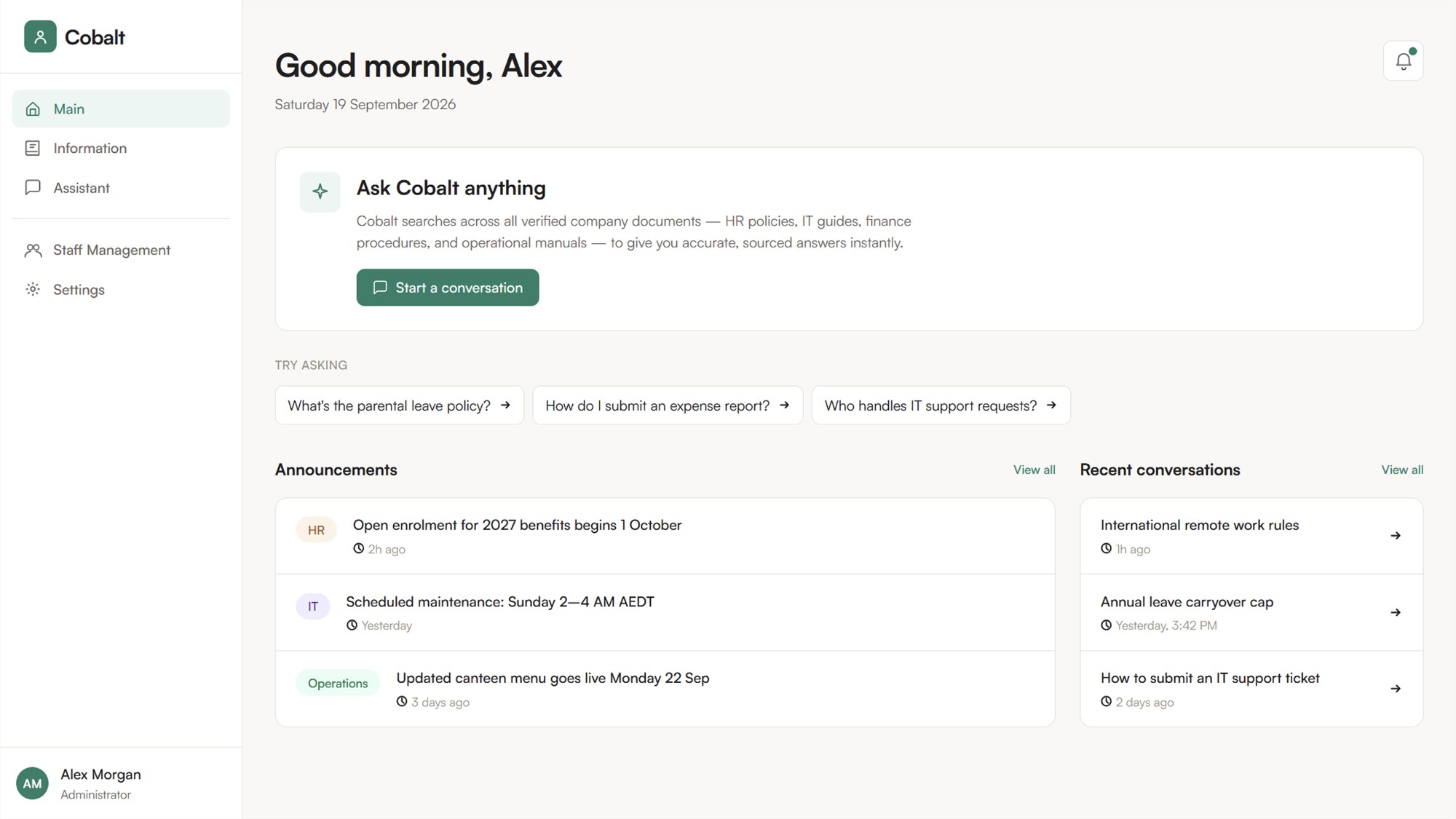
Internal knowledge search and chatbots built around your content: approved answers or RAG with a language model. T-NEX scopes access, data and implementation.
Learn more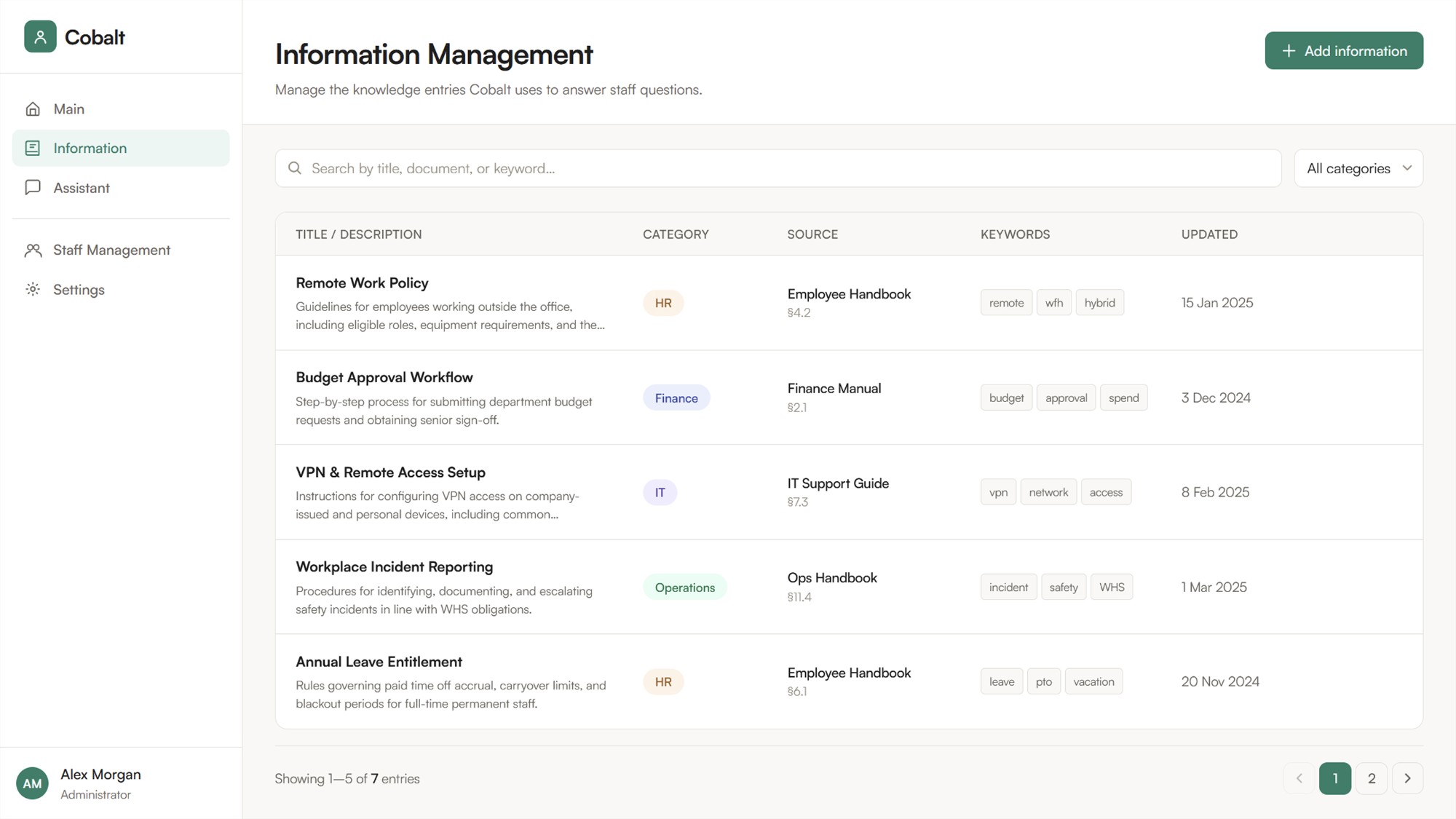
T-NEX designs and builds knowledge systems with source references, evaluating document search, RAG, knowledge graphs and maintained wikis against your questions.
Explore serviceBring a concrete task. Together, we will define what the application needs to do.
Discuss your starting point for AI agents