AI agents for 14 tasks
The 14 tasks for which T-NEX builds AI agents, with the shared components, a pilot with a measurable goal and the rules for running the agents.
Learn more
T-NEX builds AI agents for accounting and controlling: reading and matching receipts and invoices, passing data to the accounting software, flagging discrepancies and producing monthly reports. With AI reporting, finance data can be queried in natural language.
Aligned with your processes
The agent works with the receipts, data and reports that already arise in your accounting. The accounting software remains the target system. What the agent may trigger there is decided in the project.
For the receipts, we use document AI. It combines text recognition, classification of the document type and extraction of the required information; T-NEX develops it for your specific workflow. A target schema is agreed for each type of document. The intention is a review interface that brings each extracted value together with the original, so that missing and unclear information stays visible.
For reports and questions about finance data, we use AI reporting. T-NEX Dynamic AI Reporting translates a question into an analysis and shows it as a chart, table or metric. Dashboards can be shared by role and exported as images or PDFs.
Discrepancies, clarification requests and approvals follow the principles of workflow automation: a work queue for cases in which a person or role must act. The workflow automation page describes the work queue and uses a concept example to show how fixed rules, AI proposals and business approvals are kept separate; the specific system actions are developed for your business. Connecting existing systems belongs to custom software development, with data ownership, field mapping and access rights defined beforehand.
With finance data, we clarify the data path before the first test: which data comes from your company, who may see or edit it, and which access T-NEX needs for setup and support. Which content an AI model may receive is decided for each use case.
A recognised value is not yet a posting. Accurate extraction replaces neither authorisation checks nor the target system's business rules, and the business release is a separate, named step with your team. Likewise, a generated report does not establish that your data is complete or that a business interpretation is correct.
We also define which action is logged with its time and responsible person. How well the agent copes with your documents is shown by a pilot on your actual receipts and reports, not by one easy-to-read sample.
The register of AI providers in Malaysia lists further providers for this task, including accounting and ERP software with AI as well as solutions for tax, audit and compliance. This page describes only what T-NEX builds itself.
The overview shows all 14 tasks for which T-NEX builds AI agents.
Choose a use case: We begin with one recurring type of receipt, for example invoices with defined references, line items and amounts, or with a monthly report. We agree which values are really needed and where the original supports them.
Pilot with a measurable goal: The pilot runs on your actual documents, including poorly legible and incomplete ones. We measure correctly transferred values, missing information and the manual correction effort. A monthly report is compared with known figures.
Set the rules: Who may see which data, which postings a person releases, which actions are logged and which content an AI model may receive are fixed before the agent goes live.
Operation and expansion: Only after the pilot do we add further document types, reports or target systems. Responsibility for support and fault correction is agreed for the specific application.
Direct posting is implemented only when it is explicitly part of the workflow. The agent first presents a reviewable data record: the intention is that the extracted value appears beside the original. Unclear passages go to your team for review, and the team releases the proposal or corrects it. Authorisation checks and the target system's business rules remain in place.
A file handover or an API connection is possible. We check which of the two suits the existing system. Field mapping, required values and error responses are agreed with the target system, and the handover is also tested against failure and retry cases. Whether your software offers one of these options is clarified at the start of the project.
That depends on the use case. In the schema-only approach of AI reporting, the model receives structural information such as tables and fields, and the application accesses the records themselves. If specific amounts or individual records are to be interpreted, a different scope of information is needed. Which content may reach which model is agreed with you beforehand, and the same applies to receipt processing. Schema-only is not a blanket commitment for every analysis function.
The 14 tasks for which T-NEX builds AI agents, with the shared components, a pilot with a measurable goal and the rules for running the agents.
Learn moreDocument processing as a custom project: define required fields, test extraction against examples and connect the next step in your workflow.
Explore service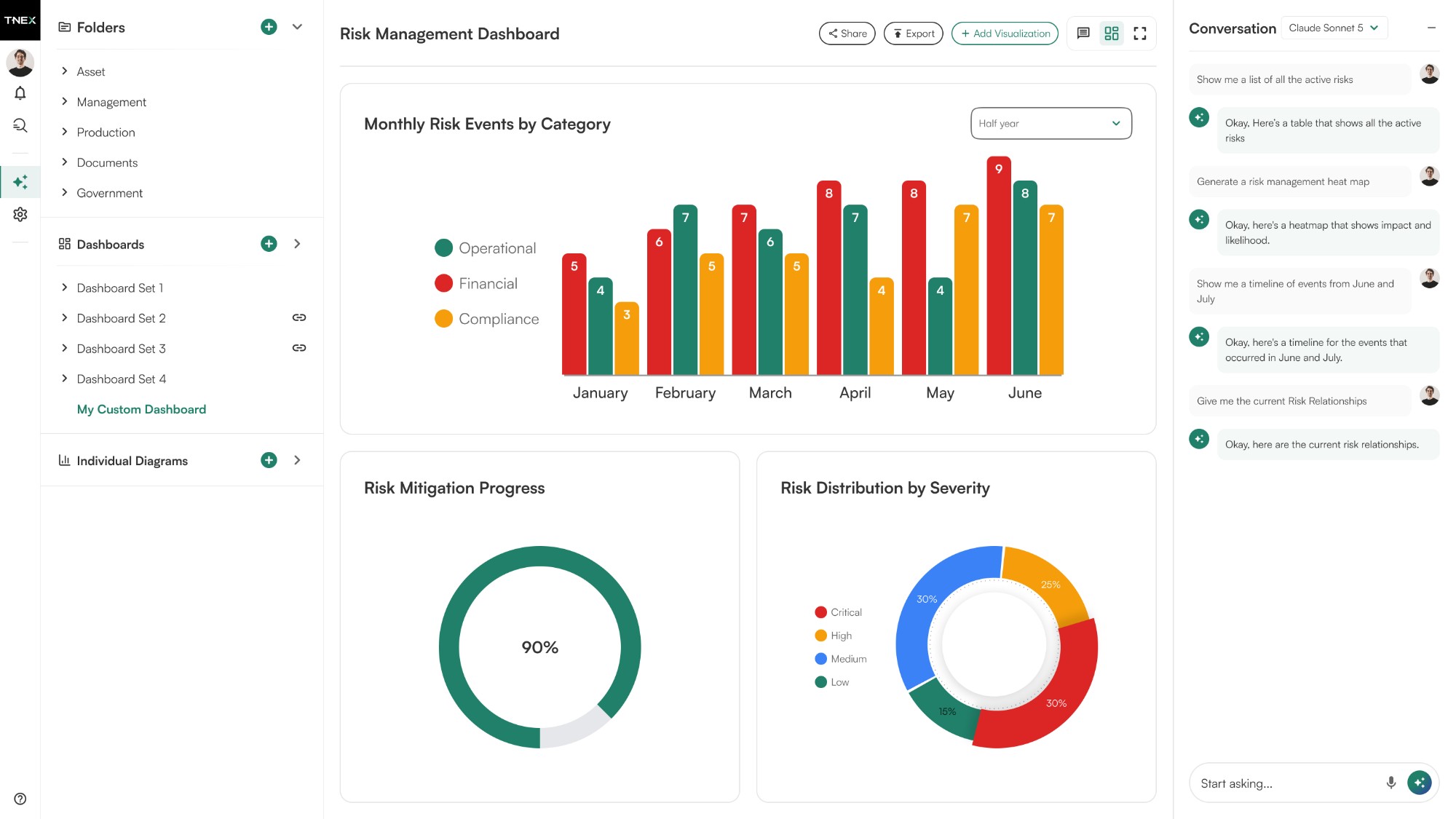
Dashboards from natural-language questions: T-NEX Dynamic AI Reporting for companies, with editable charts, role-based permissions and PDF export.
Learn more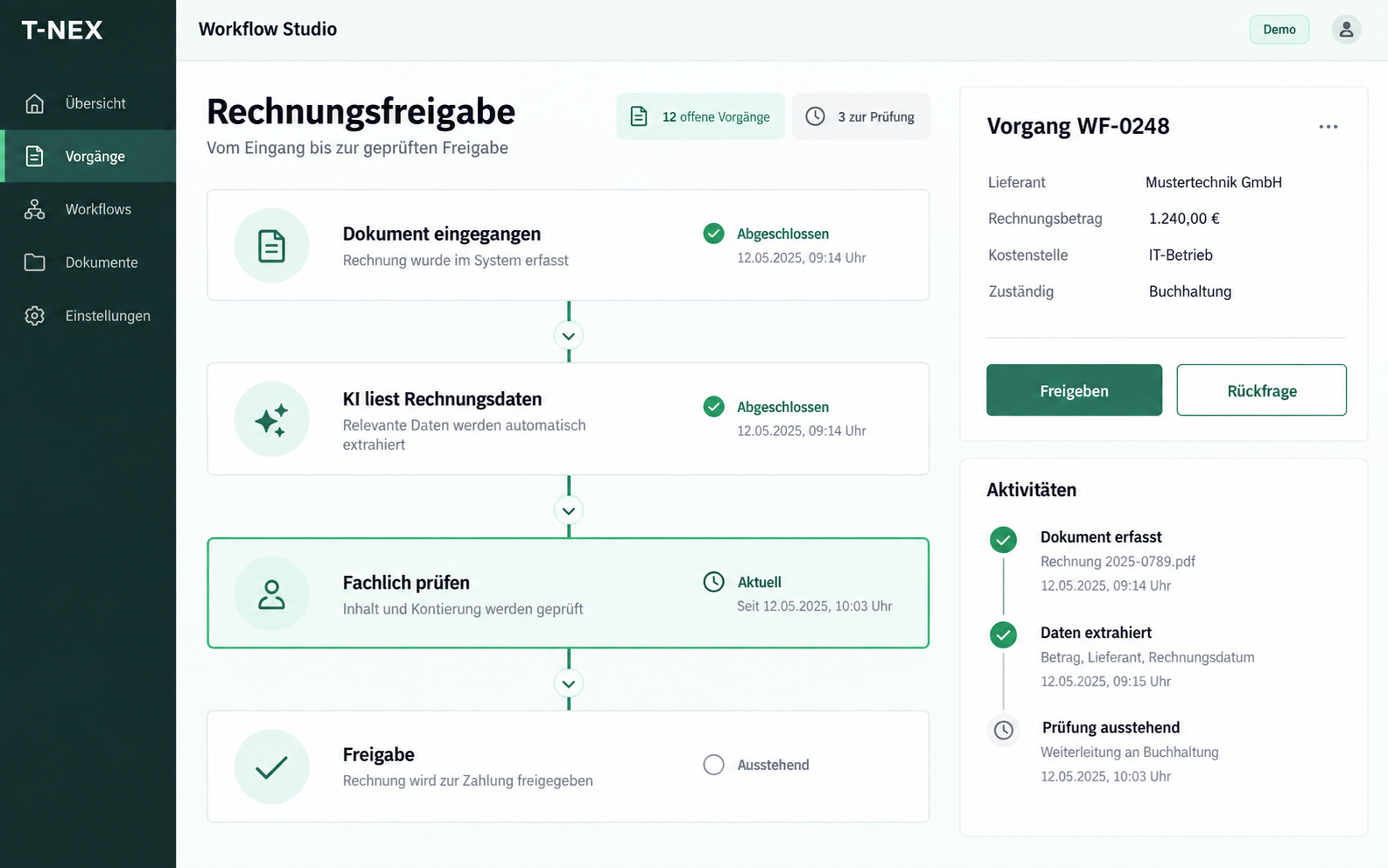
T-NEX develops custom workflows for requests and approvals, adapting existing components with suitable rules and evaluated AI steps.
Explore serviceT-NEX develops business applications and extends existing systems, from clickable prototypes and integrations to agreed handover and support.
Explore serviceBring a concrete task. Together, we will define what the application needs to do.
Discuss your accounting use case