AI agents for 14 tasks
The 14 tasks for which T-NEX builds AI agents, with the shared components, a pilot with a measurable goal and the rules for running the agents.
Learn more
T-NEX builds AI reporting and analytics agents: combining figures from ERP, point-of-sale systems and spreadsheets, answering questions on business data in natural language, producing regular reports and flagging unusual trends.
Aligned with your processes
The agent works with the figures your business already produces: orders and postings in the ERP, sales at the point of sale, planning and list data in spreadsheets. Which source is connected first is agreed in the project.
The analysis itself is handled by T-NEX Dynamic AI Reporting. A business question becomes a dashboard on the connected data; your team develops it further through the conversation or the editor, organises it in folders and shares it by role.
So that figures from ERP, point-of-sale systems and spreadsheets arrive there, we develop the connection as part of the project. Data ownership, field mapping and access rights are defined for each system. Faulty records should stay visible before they affect live operation.
Which data sources an agent may use is defined for each set of users, and viewing and editing permissions are granted separately by role. In the schema-only approach, the AI model receives structural information such as tables and fields, and the application accesses the records. If a model is to interpret specific amounts or individual records, a different scope of information is needed. We decide with you, for each use case, which content may reach which model.
A generated dashboard establishes neither that your data is complete nor that a business interpretation is correct. That is why acceptance compares generated analyses with known results, including empty datasets, incomplete sources and ambiguous questions. Who interprets a result and releases it is named in advance.
We describe data locations, access for development and support, and the services involved before setup. Support hours and availability are agreed for the specific application.
The register of AI providers in Malaysia lists further providers for this task, including solutions for BI and dashboards, for sales and demand forecasts, and partners of data platforms. This page describes only what T-NEX builds itself.
All 14 tasks for which T-NEX develops AI agents are listed in the overview.
Choose a use case: We start with a recurring, clearly defined analysis that is compiled by hand from several spreadsheets today, and check whether a reliable data source and a named owner for the figures exist.
Pilot with a measurable goal: Together with your team we define metrics, dimensions, time basis and control totals. The pilot measures whether generated analyses match known results, including empty datasets, incomplete sources and ambiguous questions.
Set the rules: Data connection, roles and permitted model connections are in place, and responsibility for interpretation and release is named, before the agent goes into operation.
Operation and extension: Only after the pilot do we add data sources, reports or users. A report goes to further roles once it has been checked against known figures; support and response times are agreed for the specific application.
The agent is designed to combine figures from ERP, point-of-sale systems and spreadsheets. Each source needs a connection to the respective system; beforehand we define data ownership, field mapping and access rights. We start with one reliable data source and one report, and further sources follow after the pilot.
In the schema-only approach, the model receives structural information such as tables and fields, and the application accesses the records. If a model is to interpret specific amounts or individual records, a different scope of information is needed; we agree for each use case which content may reach which model. A schema-only setup is not a blanket commitment for every analysis function.
The agents described here combine figures, answer questions about them, produce reports and flag unusual trends. A dedicated forecasting model, for example for sales or demand, is not part of what this page describes. If you need a forecast, we first formulate the business question together and record in the pilot how you will recognise a usable answer. We commit only to what the pilot shows on your data.
The 14 tasks for which T-NEX builds AI agents, with the shared components, a pilot with a measurable goal and the rules for running the agents.
Learn more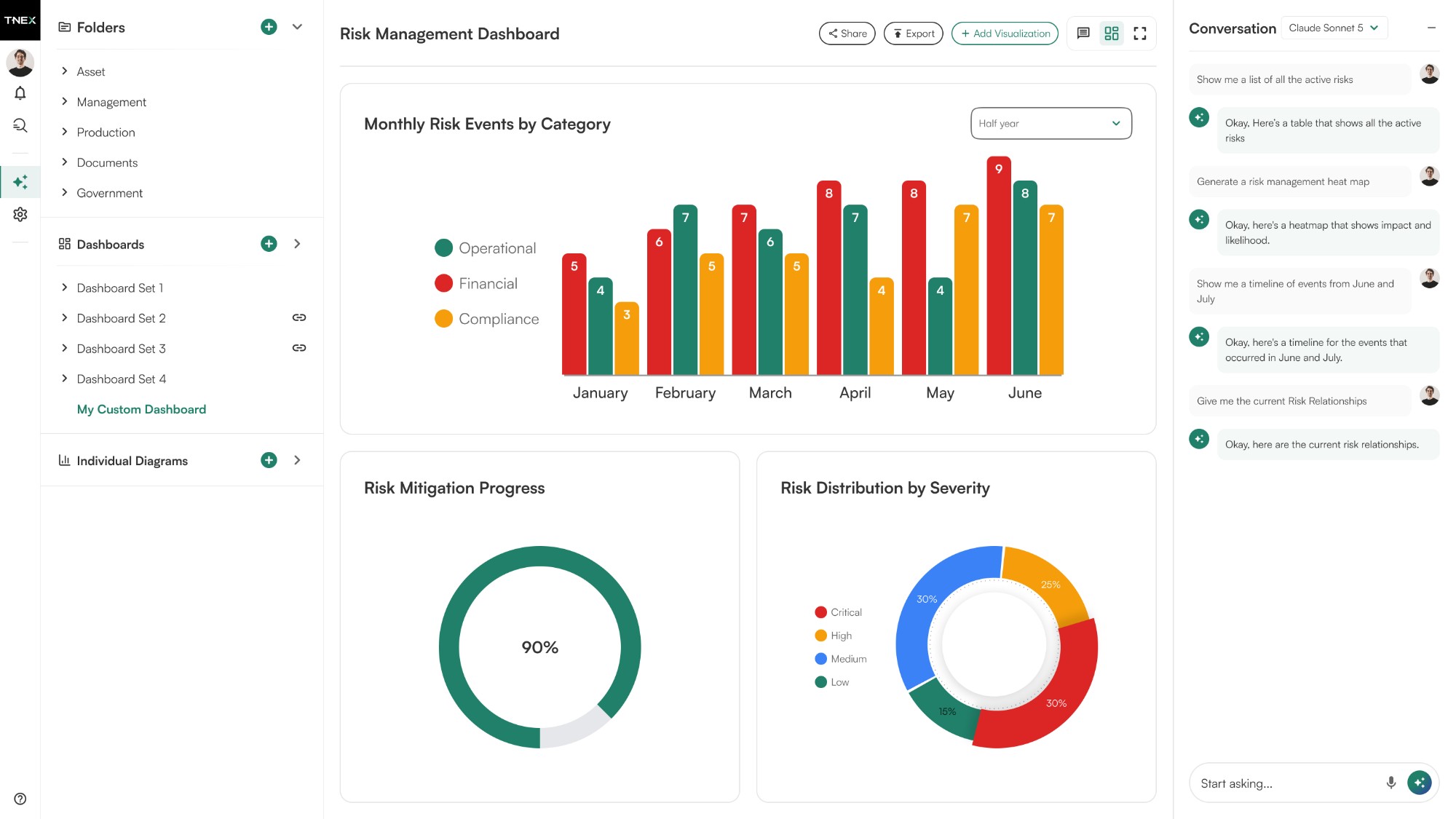
Dashboards from natural-language questions: T-NEX Dynamic AI Reporting for companies, with editable charts, role-based permissions and PDF export.
Learn moreT-NEX develops business applications and extends existing systems, from clickable prototypes and integrations to agreed handover and support.
Explore serviceEvaluate one AI use case with T-NEX: limited scope, suitable data and agreed criteria for expansion or stopping.
Explore serviceT-NEX plans hosting and support for web applications and AI solutions, with defined accounts, operating tasks, ongoing costs and a practical handover plan.
Explore serviceBring a concrete task. Together, we will define what the application needs to do.
Discuss a data analytics use case